China wind-solar hybrid energy storage system Factories, Exporter

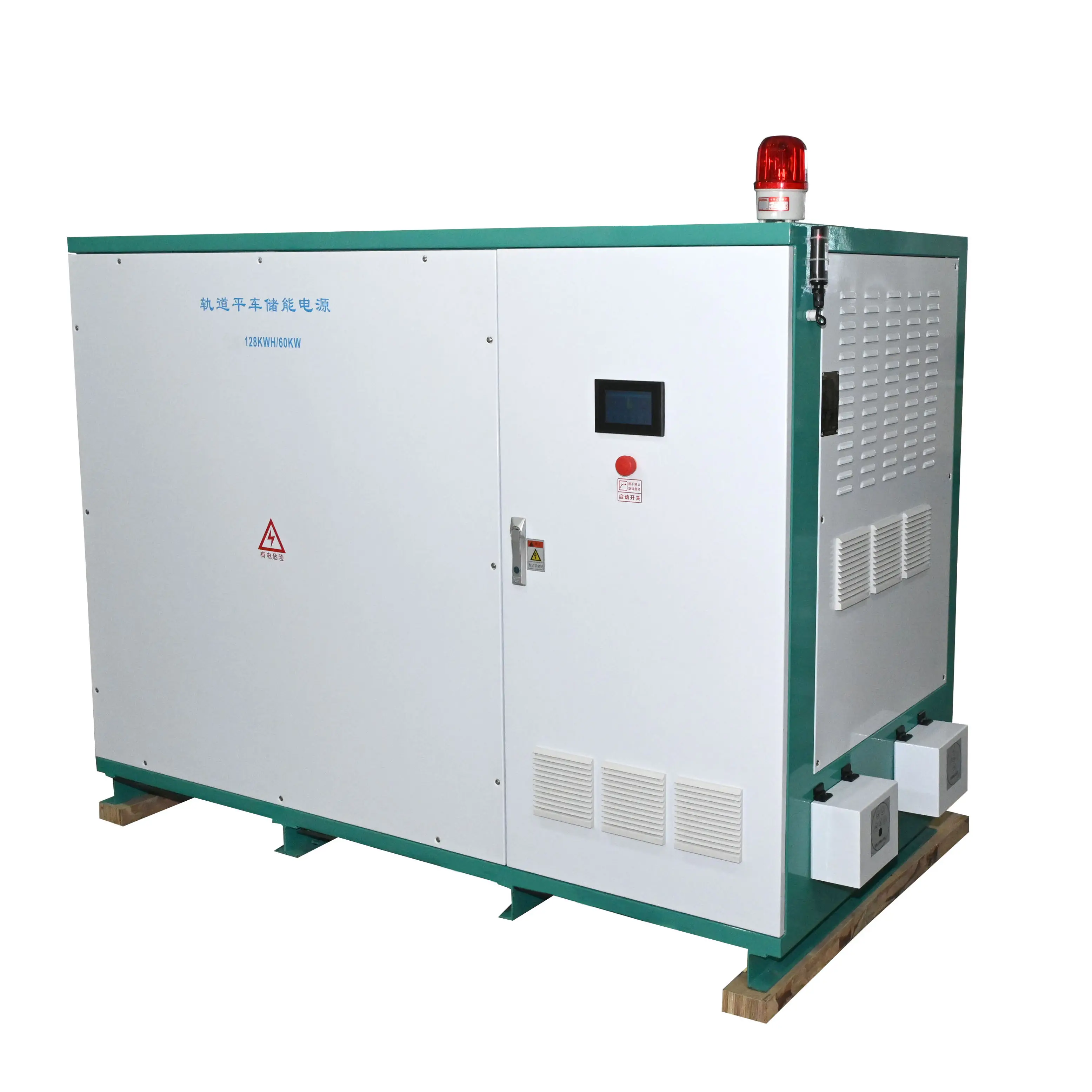
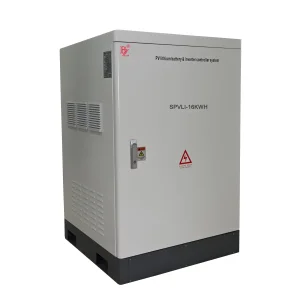
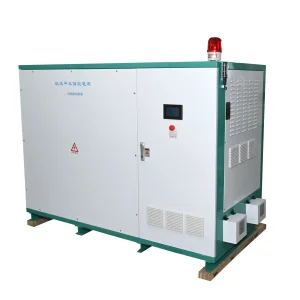
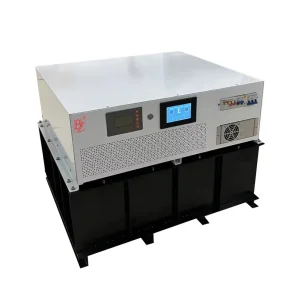
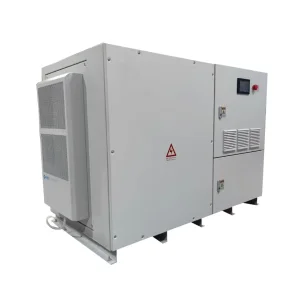
Wind-solar hybrid energy storage systems represent an integrated renewable energy solution combining wind and solar power generation with energy storage. This system utilises wind turbines and solar photovoltaic panels to generate electricity synergistically, leveraging the complementary nature of both energy sources to enhance supply stability. During daylight hours with ample sunlight, solar power takes precedence, while wind power supplements supply during night-time or overcast conditions, thereby achieving continuous 24-hour electricity provision.

Product Description

Product Advantages

1

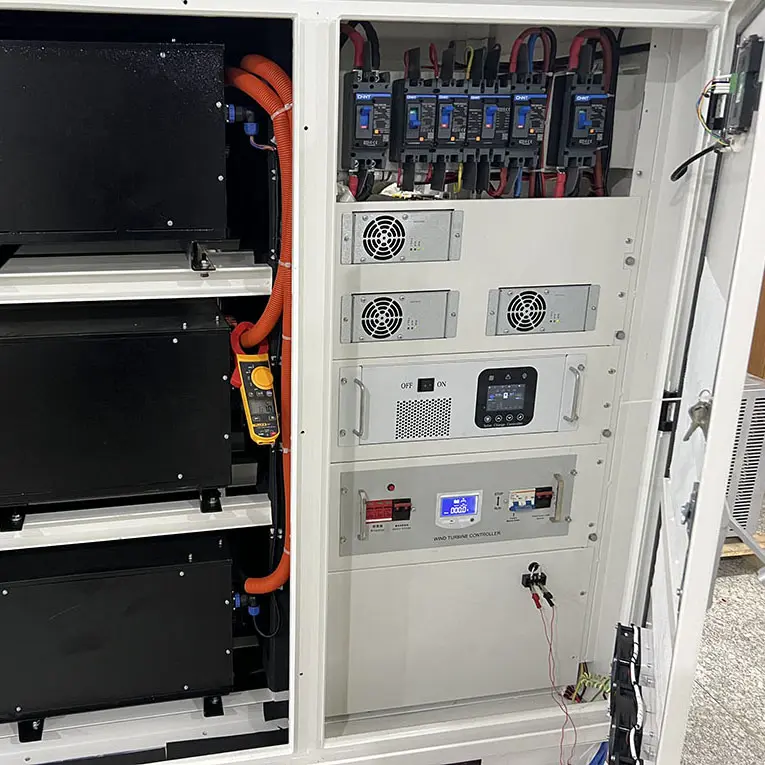
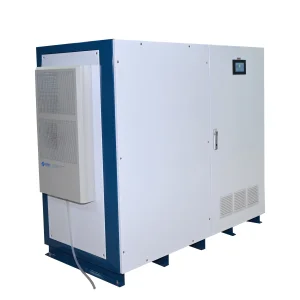
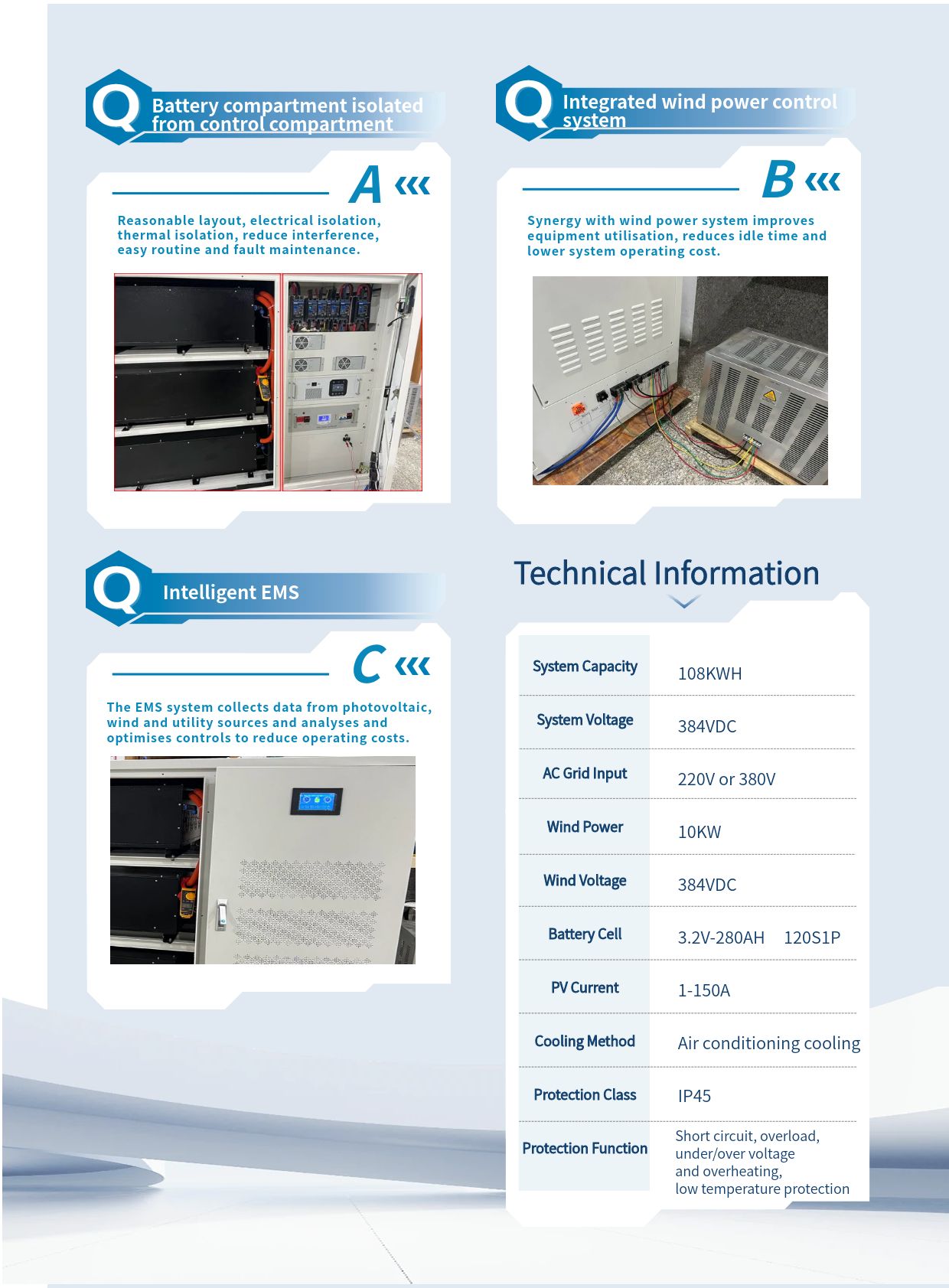
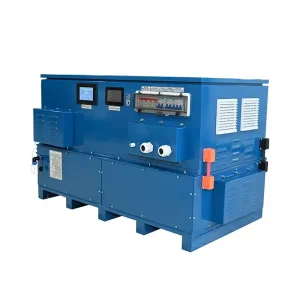
All-in-one design, high integration and space saving installation.

2

Using high-performance lithium iron phosphate cells, laser welding, good cell consistency, designed service life of more than 10 years.

3

Charging and discharging are controlled separately for convenience and reliability; discharge port remains connected during over-charging, and charging port remains connected during over-discharging.

4
Master-slave mode with passive equalization; manages equalization resistance and start voltage difference while monitoring temperature for enhanced safety.
5
BMS adopts NXP (USA) automotive-grade high-performance chips with strong anti-interference and wide temperature range reliability.
6
Advanced communication interface offering strong real-time performance, long transmission distance, and high anti-electromagnetic interference.
7
System parameters (fan start/stop, max current, SOC correction) adjustable via host computer, including insulation leakage detection.
8
Integrated solar controller, AC charger, and BMS communication control for maximum safety and reliability.
9
Automatic cell temperature management linked with climate control and fire protection systems to ensure optimal operating conditions.

Product Overview

System efficiency and cost advantages continue to expand. Mass production efficiency for photovoltaic modules has surpassed 25%, while wind turbine tower heights have increased to 180 metres, achieving overall system efficiency exceeding 65%.

Perovskite photovoltaic modules are projected to reach 28% mass production efficiency by 2027. Carbon fibre wind turbine blades enable single-unit capacities exceeding 15MW, lithium-ion batteries achieve cycle lifespans surpassing 8,000 cycles, and flow battery costs have been reduced to 0.3 yuan/Wh.

Intelligent upgrades prove even more pronounced: digital twin technology reduces O&M costs by 30%, AI forecasting algorithms elevate wind and solar output prediction accuracy to 95%, while native industrial large models enable millisecond-level dispatch, supporting large-scale virtual power plant integration.
Frequently Asked Questions

What is the expected lifespan of the battery cells?
The system utilizes high-performance lithium iron phosphate (LiFePO4) cells with laser welding, designed for a service life of more than 10 years and over 8,000 cycles.
How does the system handle charging and discharging safety?
Charging and discharging are controlled separately. This ensures that the discharge port is not disconnected during over-charging and the charging port remains active during over-discharging, significantly improving system stability.
What makes the BMS (Battery Management System) reliable?
The BMS uses NXP (USA) automotive-grade high-performance chips. These provide superior anti-interference capabilities, excellent reliability across a wide temperature range, and include insulation leakage detection.
Can the system parameters be customized?
Yes, various parameters including fan start/stop temperatures, maximum charger current, SOC correction, and discharge current correction can be set and adjusted through a host computer.
How is the temperature of the cells managed?
The system features intelligent temperature management that automatically controls air conditioner heaters based on cell conditions and can be integrated with fire protection systems if needed.
What are the current efficiency standards for the modules?
Mass production efficiency for photovoltaic modules currently exceeds 25%, with next-generation perovskite modules expected to reach 28% efficiency by 2027.

Related Products