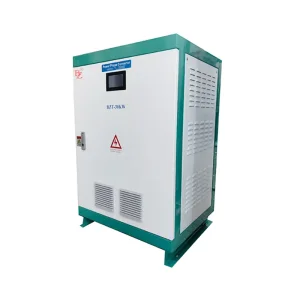
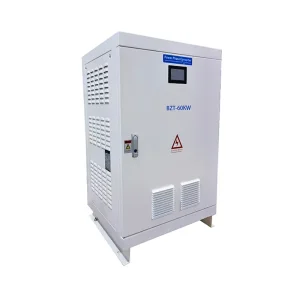
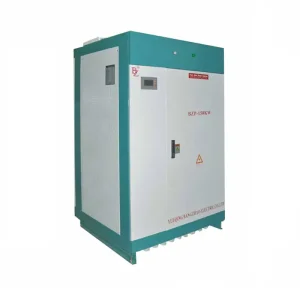
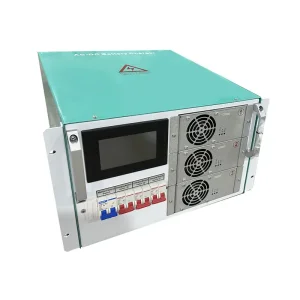
As the global community accelerates toward carbon neutrality, the role of Maximum Power Point Tracking (MPPT) has transcended simple voltage regulation. In the current industrial and commercial (I&C) landscape, MPPT technology is the linchpin for maximizing the Return on Investment (ROI) of large-scale solar assets. Whether it is a multi-megawatt solar farm in the Sahara or a decentralized microgrid on a remote island, the efficiency of the charge controller determines the viability of the entire energy ecosystem.
At Bangzhao Electric, we recognize that "off-the-shelf" solutions often fail to meet the rigorous demands of specialized industries. Our role as a custom MPPT charger supplier is to bridge the gap between theoretical efficiency and operational reality. We provide high-voltage, high-current, and ruggedized solutions that operate in environments where standard consumer-grade electronics would fail within weeks.
Established in 2008, Bangzhao Electric Co., Ltd has emerged as a titan in the power electronics industry. Our reputation as a premium MPPT charger supplier is built on the expertise of the top 100 domestic engineers and a relentless focus on technological innovation. Over the past decade, we have reinvested more than 20% of our annual sales back into R&D, ensuring that our clients receive the most advanced energy conversion technology available.
Our core philosophy—"Integrity, Rigorous, Pragmatic"—drives every stage of our production, from initial PCB layout to the final stress tests in our environmental chambers. We don't just sell products; we engineer system solutions that include Lithium battery storage, PCS bi-directional energy storage, and explosion-proof inverters.
Our Marine MPPT chargers and inverters are designed to meet the stringent requirements of the China Classification Society (CCS). This involves advanced anti-corrosion coatings, vibration resistance, and electromagnetic compatibility (EMC) for shipboard electronics.
For applications in hazardous areas, we provide explosion-proof power solutions. These are critical for the oil and gas industry, ensuring that power regulation does not become a point of ignition in volatile environments.
We provide localized firmware support to ensure our systems comply with various international grid standards, facilitating seamless integration for both on-grid and off-grid scenarios across Europe, Asia, and the Americas.
We are currently integrating Gallium Nitride (GaN) and Silicon Carbide (SiC) components into our high-power MPPT chargers. These materials allow for higher switching frequencies, leading to smaller footprints and significantly reduced heat dissipation.
Traditional MPPT methods can struggle with rapid cloud shading. Our future iterations utilize machine learning to predict shading patterns and optimize the tracking curve in milliseconds, reclaiming up to 5% of lost energy compared to standard P&O (Perturb and Observe) algorithms.
As part of our Smart Grid initiative, all custom MPPT controllers now feature cloud connectivity. This allows for predictive maintenance—identifying potential battery failures or solar array degradation before they impact operations.
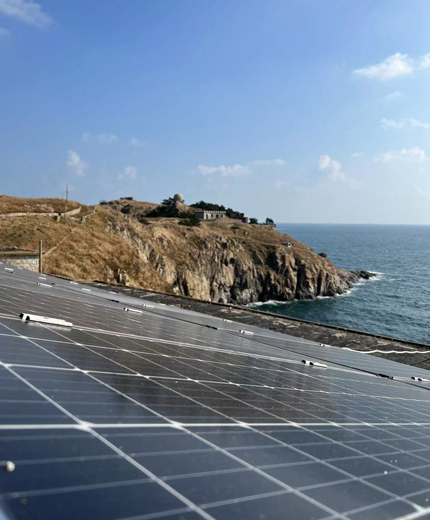
Utilizing high-frequency off-grid inverters and MPPT controllers to provide stable electricity for remote islanders, reducing fossil fuel dependence.
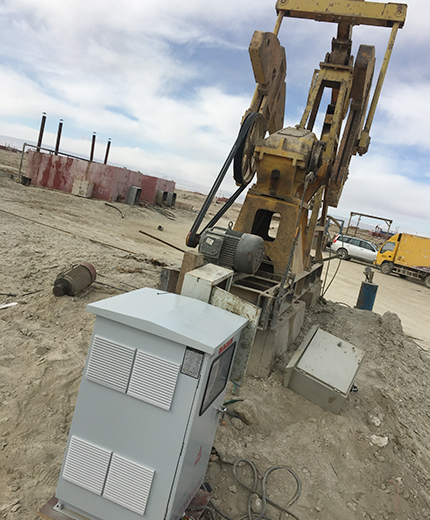
Green oil extraction using PV water pump inverters with MPPT (400-800V), adapted for harsh remote oil field environments.

Frequency and voltage stabilization systems for onboard electrical equipment, conforming to CCS approvals.
High-voltage systems reduce the current required for the same power output, which significantly decreases line losses and allows for thinner, more cost-effective cabling in large industrial installations.
Yes. While we specialize in Lithium-ion (LFP/NMC) storage, our MPPT chargers can be custom-programmed for Lead-Acid, Gel, and even specialized Nickel-Cadmium profiles for railway applications.
Depending on complexity, design and prototyping take 4-6 weeks, with mass production following rigorous testing protocols to ensure E-E-A-T standards are met.
Our industrial-grade units feature intelligent thermal management systems, allowing full-load operation from -25°C to +60°C, with automatic de-rating to protect internal components during thermal spikes.
 Bangzhao Electric