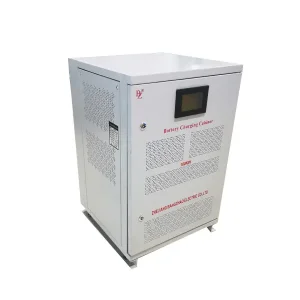
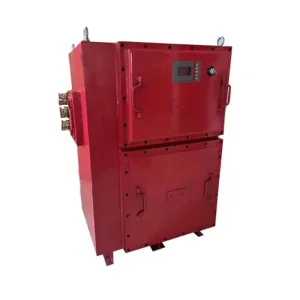
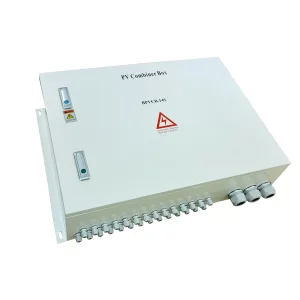
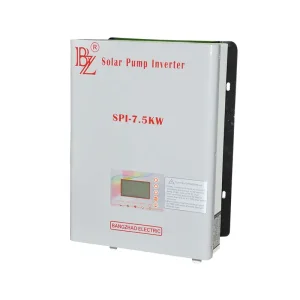
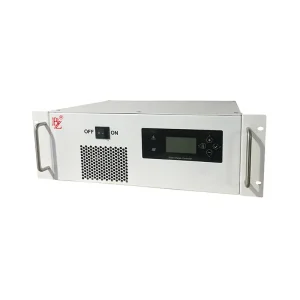
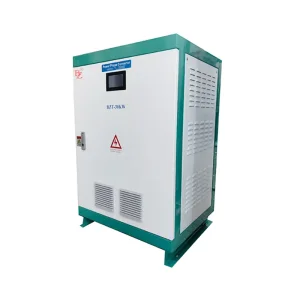
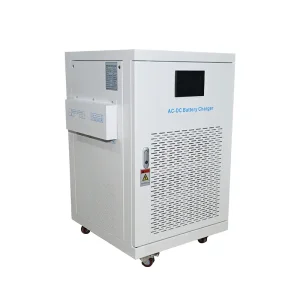
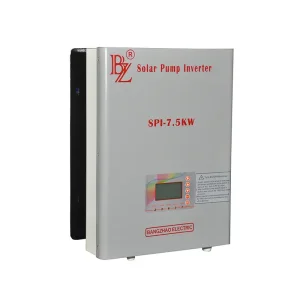
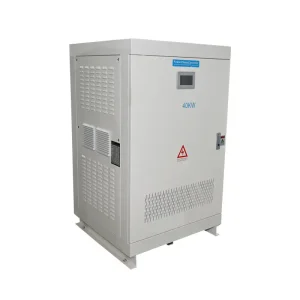
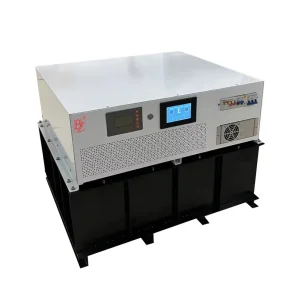
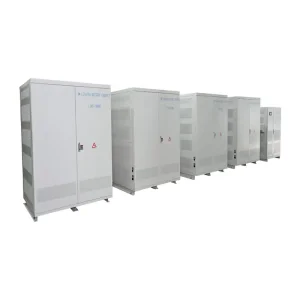
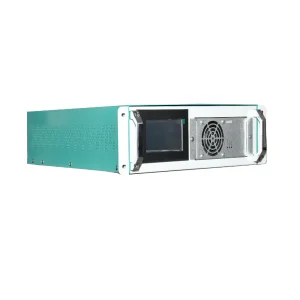
In the modern industrial landscape, the role of an AC to DC rectifier has transcended basic power conversion. Today, high-quality rectifier suppliers are at the forefront of the global energy transition, providing the critical interface between the alternating current (AC) power grid and the direct current (DC) world of batteries, telecommunications, and electric mobility.
From the early days of bulky, inefficient linear power supplies to the contemporary era of High-Frequency Switch-Mode Rectifiers (SMR), the industry has shifted its focus toward power density, efficiency, and intelligence. Modern factories now demand modular architectures that allow for "N+1" redundancy, ensuring that power systems remain operational even during component failures. As we integrate more renewable energy sources, the need for bidirectional power conversion—allowing energy to flow back to the grid—is becoming a standard requirement for Tier-1 suppliers.
Leveraging SiC MOSFETs to achieve 98%+ efficiency and significantly reduce thermal management requirements in high-power applications.
Moving from analog loops to DSP-based control systems for real-time monitoring, predictive maintenance, and adaptive charging profiles.
Tailoring rectifier designs for massive DC loads required by water electrolyzers and ultra-fast charging stations.
For procurement directors and system integrators, selecting a rectifier factory is a strategic decision that impacts the 20-year lifecycle of an industrial project. The global market is currently witnessing three major shifts in procurement demand:
Peak Efficiency Achieved
Standard MTBF Rating
Countries Served Globally
Industry Excellence Since
The next decade of power electronics will be defined by "Software-Defined Power." We are moving beyond hardware specifications into the realm of cloud-connected power systems. Our roadmap at Bangzhao Electric focuses on three pillars:
By 2026, over 70% of our high-power AC-DC converters will utilize Wide Bandgap (WBG) semiconductors, allowing for a 40% reduction in cabinet size while handling higher voltages.
Integrating machine learning algorithms within the DSP to predict capacitor aging and fan failure before they occur, reducing downtime to near-zero levels.
Developing ultra-wide input voltage ranges (300VAC to 520VAC) to ensure stable operation in regions with unstable grid infrastructure, particularly in emerging markets.
Established in 2008, Bangzhao Electric Co., Ltd has evolved into a global leader in power electronics. Our high-performance products are the result of rigorous R&D led by the top 100 engineers in the domestic industry. For over 15 years, we have provided comprehensive system solutions including Lithium battery storage systems, PCS bi-directional power supplies, and high-capacity AC-DC chargers.
Our annual investment in technology development exceeds 20% of sales. This commitment has yielded numerous patents and certifications, making us the preferred supplier for Fortune 500 energy companies and government infrastructure projects.
Whether it's for solar energy, wind power, marine navigation, or aviation automation, our "Integrity, Rigorous, Pragmatic" approach ensures that every rectifier leaving our factory is built to withstand the harshest environments on Earth.
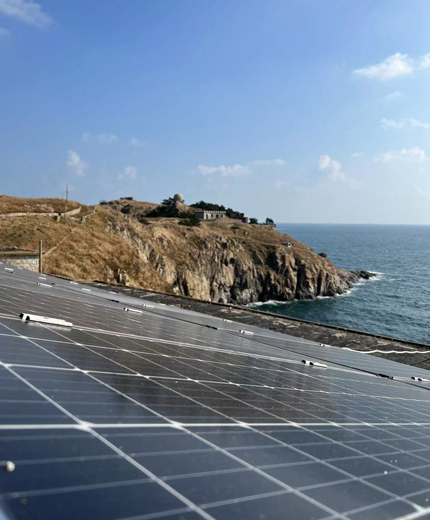
Utilizing high-power rectifiers and PV controllers to provide stable electricity for remote island communities, reducing reliance on fossil fuels.

CCS-approved power systems designed for navigation and communication equipment on commercial vessels, featuring robust frequency stabilization.
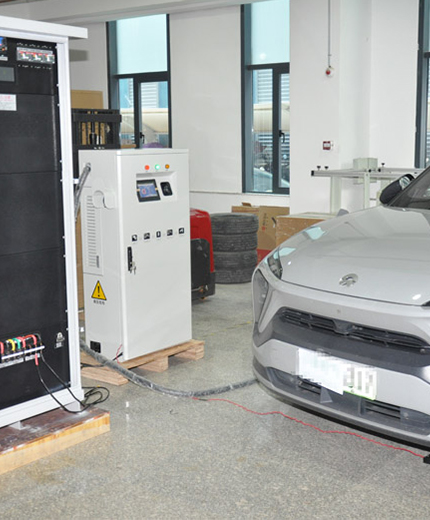
Integrating high-efficiency AC-DC chargers with solar energy to create green "Super-charging" stations for the transport sector.
Industrial rectifiers are designed for continuous 24/7 operation under heavy load, often featuring higher isolation levels, superior thermal management, and protection against grid transients that would destroy consumer-grade electronics.
Silicon Carbide (SiC) semiconductors allow for faster switching speeds with lower energy loss. This results in smaller transformers and inductors, leading to a more compact, cooler-running, and more efficient AC to DC converter.
Yes. Our digital control systems allow for programmable charging curves, making them compatible with Lead-Acid, Lithium-ion (LiFePO4), and even Flow Battery systems, ensuring optimal battery health and longevity.
Ensure the supplier holds ISO9001 for quality management, CE for European market access, and UL for North America. For marine applications, CCS or DNV certification is essential.
Bangzhao Electric remains committed to providing "Integrity, Rigorous, and Pragmatic" service to our global partners. Contact our engineering team today for custom power solutions tailored to your industry.
 Bangzhao Electric