Global sourcing demands more than a low purchase price. It requires stable performance, clear documentation, and dependable support across different operating environments. A Dc Power Supply can meet these needs when engineers evaluate it beyond basic voltage and current ratings. The right unit delivers clean, adjustable output for testing, automation, laboratory work, and production equipment. It can also reduce compatibility concerns when input ranges, connectors, cooling methods, and communication interfaces are reviewed early.
Practical sourcing experience shows that small details often affect long-term reliability. A power supply with remote sensing can compensate for voltage drops across longer cables. Overvoltage, overcurrent, and thermal protection can help protect both equipment and operators. Buyers should request test reports, calibration information, warranty terms, and traceable quality records. Supplier communication matters too, especially when technical questions cross languages and time zones. Look for responsive engineering support. Not every attractive specification tells the full story. Some products perform well in controlled demonstrations but behave differently under heat, continuous load, or unstable input conditions. That possibility deserves honest attention. Comparing samples under realistic conditions is wiser than trusting brochures alone. Regional certification requirements and installation practices should also be confirmed before purchase. A reliable supplier explains limitations instead of hiding them. This process may take longer, but it can prevent costly replacements, delayed shipments, and inconsistent production results. Choosing a Dc Power Supply is therefore a technical decision, not merely a procurement shortcut. The best choice balances efficiency, safety, serviceability, and evidence from actual use.
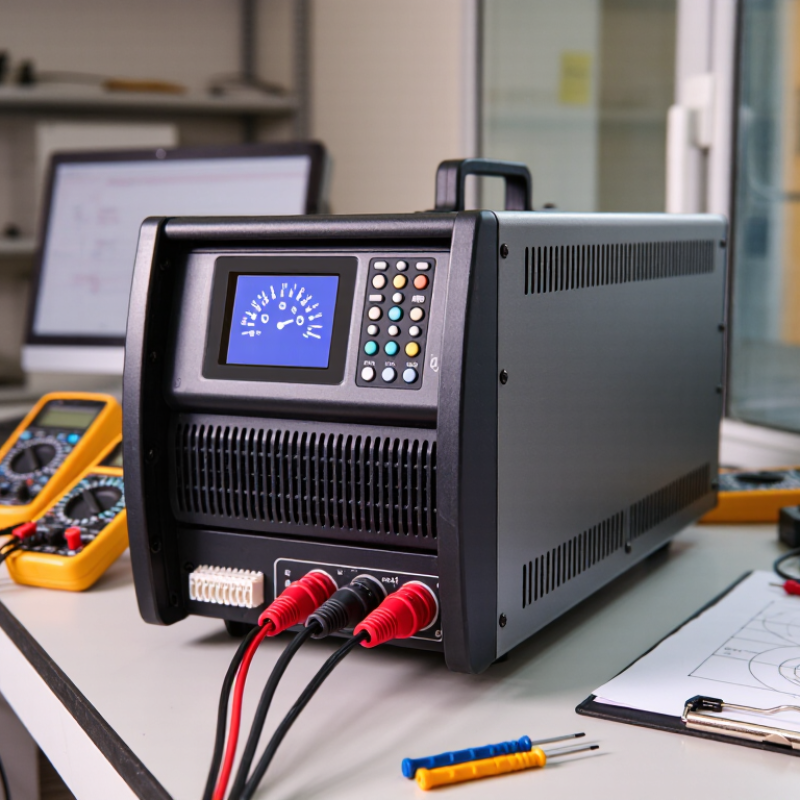
What Is a DC Power Supply?
A DC power supply converts alternating current into stable direct current for electronic equipment. It controls voltage, limits current, and reduces electrical fluctuations. The output may power a circuit, charge a battery, or drive industrial controls.
Unlike AC, DC flows in one direction. A switching design usually offers high efficiency and compact size, while a linear design can provide exceptionally low noise. The choice depends on load behavior, ripple tolerance, operating temperature, and required protection.
For global sourcing, input range matters. A unit rated for 100–240 volts AC can simplify deployment across regions. Still, that specification does not prove reliable performance.
In supplier reviews, I examine thermal test results, overload protection, electromagnetic compatibility records, and evidence aligned with IEC 62368-1. The IEA’s Electricity 2024 report states that data centers consumed about 460 TWh globally in 2022 and may exceed 1,000 TWh by 2026. Small conversion losses deserve attention.
The Global E-waste Monitor 2024 reports 62 million tonnes of electronic waste in 2022, with only 22.3% formally recycled. Designing for repair and longer service life is therefore practical, not decorative. A lower purchase price can hide higher energy and replacement costs.
I have learned to question impressive efficiency claims without test conditions. More testing is not always better. Clear testing is better.
How DC Power Supplies Support Global Sourcing
Global sourcing needs power equipment that travels well across markets.
DC power supplies help because they provide stable, adjustable output for testing, automation, communications, and battery-based systems. Their voltage settings can support different product platforms without redesigning every workstation. This flexibility reduces duplicate inventory and simplifies supplier qualification. The IEA’s Electricity 2024 report estimates that data centres consumed about
460 TWh globally in 2022. Demand could exceed
1,000 TWh by 2026. Efficient conversion is becoming a sourcing requirement, not just an engineering preference.
A well-selected DC supply also improves cross-border quality control. Buyers can request programmable limits, remote monitoring, overload protection, and calibration records. These features create comparable test results between factories in different countries. The IEC 62368-1 safety framework provides a useful reference for information and communication technology equipment. However, compliance alone is not enough. Cable types, input voltage ranges, local service capacity, and spare-unit availability still affect total cost. The World Bank’s Logistics Performance Index 2023 shows meaningful differences in supply-chain reliability across 139 economies. A technically excellent unit may still fail commercially if replacement parts arrive slowly.
Tips:
Ask suppliers for a sample test before placing a volume order. Check performance at low and high input voltages. Review efficiency at partial load, where equipment often operates. Keep one spare unit near the production line. This may seem excessive, but downtime is rarely cheap. Also, document every setting. Small misunderstandings can cross borders too.
Key Technical Factors for International Selection
Why Choose a DC Power Supply for Global Sourcing?
International selection depends on more than output voltage and price. Input compatibility matters first: a practical unit should support 100–240 VAC and both 50 Hz and 60 Hz networks. The IEA’s Renewables 2024 report recorded nearly 510 GW of renewable capacity added in 2023. This rapid expansion can increase voltage variation and switching events in some industrial environments. Strong regulation, low ripple, and fast transient response therefore deserve careful testing.
Check efficiency at different loads, not only at full power. A supply operating at 30% load may behave differently from its headline specification. Thermal derating is equally important. A cabinet reaching 45°C can reduce available output, especially in sealed equipment. IEC 61010-1 supports safety evaluation for measurement and laboratory equipment, while IEC 61326-1 addresses electromagnetic compatibility. These standards help, but they do not replace application-specific verification.
Protection features need practical review. Confirm overvoltage, overcurrent, short-circuit, and overtemperature behavior with test records. Uptime Institute’s Global Data Center Survey has repeatedly identified power-related incidents as a major operational concern, reminding buyers that recovery behavior matters. I have seen datasheets hide important conditions in footnotes. That is a warning. Ask for ripple measurements, efficiency curves, derating charts, and EMC test evidence before comparing quotations. A low purchase price can become expensive when validation, cooling, and replacement logistics are ignored.
Why Choose a DC Power Supply for Global Sourcing?
Typical nominal AC mains voltage varies across major markets. A DC power supply rated for a universal 100–240 V AC input and 50/60 Hz operation can reduce regional variants and simplify international procurement.
The values represent common nominal mains voltages: 100 V in Japan, 120 V in North America, and 230 V in Europe, the United Kingdom, Australia/New Zealand, and India. Actual local installations may vary, so the final product specification should confirm the required input range, frequency, safety approvals, efficiency, protection functions, and output regulation.
Compliance and Compatibility Across Global Markets
Why Choose a DC Power Supply for Global Sourcing?
Compliance and Compatibility Across Global Markets
A DC power supply can simplify international sourcing when its design supports different electrical environments. Input voltage range matters. So does frequency compatibility. A unit built for one region may fail during testing in another. Check these details before placing a large order.
In practical sourcing work, I examine input ratings, output stability, plug options, and connector polarity. Small differences can stop a device from operating safely. Documentation also needs attention. Clear test reports, safety information, traceable serial numbers, and calibration records help purchasing teams verify product quality. Local requirements may also involve electromagnetic compatibility, energy efficiency, and material declarations. Requirements vary by destination. Professional review remains necessary.
Compatibility is more than fitting a socket. The supply must match the equipment’s voltage, current, protection limits, and operating conditions. Temperature and humidity can change performance. A supplier should provide reliable specifications, sample testing, and consistent production records. Independent testing may be appropriate for higher-risk applications. It costs time. It can prevent expensive rework.
A universal label is not enough. I have seen teams trust a familiar plug while overlooking output noise or missing documentation. That assumption is easy to make. It is also costly. Buyers should compare regional versions, confirm the latest applicable standards, and keep approval records for every shipment. Even careful plans need review when regulations or product designs change.
How to Evaluate Suppliers and Select the Right Model
Why Choose a DC Power Supply for Global Sourcing?
How to Evaluate Suppliers and Select the Right Model
Global sourcing can lower costs, but a DC power supply deserves careful technical review. The cheapest quotation may hide weak documentation, unstable output, or difficult after-sales support. During practical evaluations, I check supplier response time, test records, calibration certificates, and production consistency. Ask for a recent sample report, not a polished promise.
A reliable supplier should explain constant-voltage and constant-current operation clearly. Confirm input voltage compatibility for the destination market. Review output range, power rating, ripple, load regulation, and response time. Protection features matter too, including overvoltage, overcurrent, overheating, and short-circuit protection. For sensitive equipment, remote sensing can reduce voltage loss across long cables. Request evidence of testing against applicable electrical safety and electromagnetic compatibility requirements.
Choose the model from real load data, not guesswork. Record normal current, startup demand, continuous duty, and expected temperature. Leave reasonable capacity headroom. Too much capacity can increase cost and reduce efficiency. Too little can cause nuisance protection trips. I once focused too heavily on rated power and overlooked connector durability. That mistake is easy to repeat. Suppliers should also provide manuals, wiring diagrams, spare-part information, warranty terms, and realistic lead times. A factory audit or video inspection can reveal labeling gaps and inconsistent assembly. Independent sample testing remains valuable, because supplier documents are not always complete.
FAQS
Choose a unit supporting 100–240 VAC and both 50 Hz and 60 Hz networks. That improves destination flexibility.
Review output range, rated power, ripple, load regulation, and transient response. Do not trust headline power alone.
Efficiency can change significantly at 30% load compared with full power. Request efficiency curves for realistic operating conditions.
A sealed cabinet reaching 45°C may reduce available output. Check derating charts before installation.
Confirm overvoltage, overcurrent, short-circuit, and overtemperature behavior. Ask for test records. Datasheet footnotes can hide limitations.
Record normal current, startup demand, continuous duty, and expected temperature. Leave reasonable capacity headroom. Too much capacity also costs money.
Remote sensing can reduce voltage loss across long cables. It is useful for sensitive equipment and distant loads.
Review response time, calibration certificates, sample reports, production consistency, and warranty terms. A video inspection may reveal poor labeling or uneven assembly.
Supplier documents may be incomplete or overly polished. Test ripple, protection behavior, connectors, and output stability independently.
Do not focus only on rated power or purchase price. I once overlooked connector durability. That was avoidable.
Conclusion
A Dc Power Supply converts incoming electrical energy into stable direct current, making it essential for testing, manufacturing, laboratory work, telecommunications, and industrial equipment. For global sourcing, it offers reliable voltage and current control, consistent performance, and flexibility across different operating environments. Selecting the right model requires careful attention to output range, power capacity, regulation accuracy, efficiency, cooling method, protection functions, and communication interfaces.
International buyers should also confirm that the Dc Power Supply is compatible with local input standards, frequency requirements, plug configurations, and applicable safety or electromagnetic compatibility expectations. A dependable supplier should provide clear technical specifications, quality documentation, testing records, warranty terms, and responsive after-sales support. Comparing supplier experience, production consistency, customization capability, delivery performance, and total ownership cost can help businesses choose a suitable solution. By combining technical evaluation with compliance checks and supplier assessment, companies can reduce sourcing risks and build a stable power solution for diverse global applications.

 Bangzhao Electric