Choosing the right Ac-Dc Charger is not simply a matter of comparing wattage and price. Global buyers must examine input voltage, output stability, connector types, efficiency, thermal performance, and safety certifications. A charger that works well in a cool warehouse may struggle beside a hot production line. That difference matters.
This guide introduces ten AC DC chargers selected for practical international purchasing decisions. Each option is considered through real-world details, including enclosure quality, cable flexibility, cooling design, standby consumption, and expected service life. Compatibility also deserves careful attention. Regional plug formats, grid conditions, and equipment requirements can change the final buying decision.
No charger is perfect.
A strong specification sheet may still hide weak technical support or limited replacement access. For that reason, this overview looks beyond headline power ratings. It considers supplier reliability, documentation quality, warranty clarity, and after-sales responsiveness. These factors can reduce delays when equipment operates far from the original seller.
The list is intended for distributors, manufacturers, installers, and professional users seeking dependable charging solutions across different markets. It does not treat the highest output as the automatic winner. Lower energy loss, safer heat control, and consistent performance may be more valuable over several years.
Some recommendations will fit demanding industrial environments. Others may suit retail equipment, communications devices, automation systems, or mobile applications. Readers should still verify local requirements and product specifications before ordering. That final check is easy to skip. It should not be.
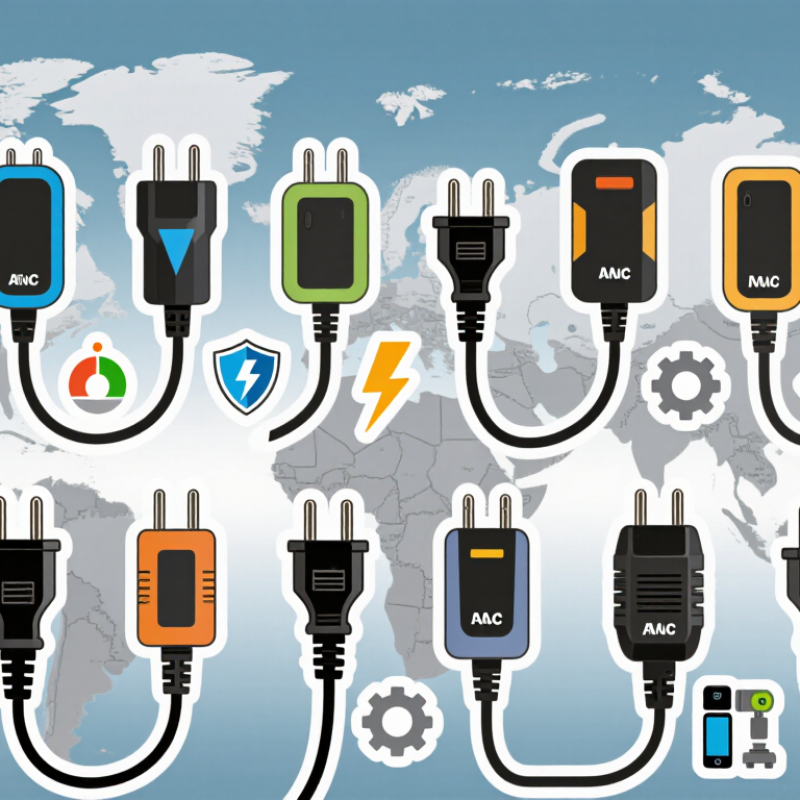
AC and DC chargers differ mainly in where electrical conversion happens. An AC charger supplies alternating current to the device, which converts it internally to direct current. A DC charger performs that conversion inside the charger and delivers DC power directly. This difference affects equipment size, heat management, and compatibility. For example, a small device may contain its own charging circuit, while an industrial battery system may use an external DC unit. The label alone is not enough; check the device’s required voltage, current, connector, and charging profile.
AC chargers are often simpler and widely suited to everyday power sources. DC chargers can support precise charging control, but their output must closely match the battery or equipment specifications. Efficiency also depends on the full system, including cables and internal electronics. I have seen buyers focus on wattage and overlook connector polarity or temperature limits. That can lead to a charger that fits physically but performs poorly. Specifications deserve a second look.
Tips: Compare input voltage ranges for the countries where the charger will be used. Confirm output voltage, current, connector type, and safety certifications. Leave room for operating-temperature differences. A charger that works on a test bench may behave differently in a warm cabinet. Small detail, big impact.
Global buyers should evaluate charger performance beyond its advertised wattage. Start with input compatibility, especially when equipment may operate across 100–240V networks. Check continuous output, not only peak power. A charger delivering 1000W for five minutes may perform differently after an hour.
Thermal behavior deserves close attention. During testing, place the charger in a warm room and monitor its casing, fan noise, and output stability. Efficient models waste less energy as heat. Look for overcurrent, overvoltage, short-circuit, and temperature protection. These details matter in warehouses, workshops, and remote installations. Small displays can also help technicians identify voltage drops quickly.
Cable quality is easy to overlook. A thin cable can become warm under sustained current. Connector fit matters too. Loose connections may create resistance and unstable charging. Buyers should request test data, inspection reports, and clear operating limits. Independent certification and traceable quality records improve confidence, but paperwork is not performance. A perfect specification sheet can still hide weak cooling or poor durability. Real-world testing may reveal flaws after repeated cycles. Humidity, dust, altitude, and transport vibration should influence the evaluation. Warranty response and replacement parts also affect long-term value. The cheapest option may become expensive when one failed unit stops a production line.
A useful charger ranking depends on location, traffic, climate, and grid capacity. The International Energy Agency reported over four million public charging points worldwide at the end of 2023, with China holding about 60% of them. For global buyers, the ten practical categories are home AC chargers, apartment AC chargers, workplace AC chargers, hotel and retail AC chargers, fleet-depot AC chargers, portable AC chargers, urban DC fast chargers, highway DC chargers, electric-bus and truck DC chargers, and battery-buffered or solar-assisted DC chargers.
AC charging suits vehicles parked for hours. A 7–22 kW unit can serve homes, offices, and destinations efficiently. DC charging fits taxis, highways, and commercial fleets needing shorter stops. The IEA’s Global EV Outlook 2024 notes that public fast-charging capacity is expanding rapidly, especially along major travel corridors. However, a higher power rating does not guarantee faster charging. Heat, battery limits, cable length, and local grid conditions reduce real output. That detail is often overlooked. The U.S. Department of Energy also identifies connector compatibility, safety certification, networking reliability, and installation cost as key purchasing factors. In colder markets, thermal management matters. In weak-grid regions, load balancing or battery buffering may matter more than peak power. A perfect top ten is impossible. Buyer requirements remain stubbornly local.
Top 10 AC DC Chargers for Global Buyers?
Safety Standards, Compatibility, and Regional Requirements
A strong top-ten charger list should begin with certification, not charging speed. The IEA’s Global EV Outlook 2024 reported more than four million public charging points worldwide at the end of 2023. That rapid expansion increases the risk of inconsistent installation quality. Look for equipment tested against IEC 61851 and IEC 62196, with residual-current protection, thermal monitoring, and clear fault indicators. Enclosures should match the site’s moisture and dust exposure.
Compatibility is more complicated than a familiar plug. AC chargers commonly use Type 2 in Europe and many markets, while North America relies widely on SAE J1772. China mainly uses GB/T interfaces. DC systems add regional combinations and communication requirements. ISO 15118 can support advanced identification and charging functions, but vehicle support remains uneven. Test the complete chain: connector, cable length, voltage, phase supply, software, and vehicle inlet.
Regional rules also affect deployment. The European Union’s Alternative Fuels Infrastructure Regulation sets requirements for public charging availability and payment transparency. North American projects may require certified equipment, local electrical inspection, and ground-fault protection. In Australia and other regions, grid connection rules can change by state or utility. Installation experience matters here. A charger may pass laboratory tests yet perform poorly in heat, dust, or unstable voltage. No ranking is perfect. Some buyers still overvalue peak power and underestimate maintenance access, spare parts, and firmware security. Check the report, then inspect the site.
The chart compares representative nominal AC supply voltages across ten major regional markets. Buyers should verify local electrical codes, plug systems, grounding requirements, and charger certification before selecting equipment.
Compatibility typically involves IEC 60364 installation practices, IEC 62196 connector requirements, and IEC 61851 conductive charging controls where applicable. North American products commonly require 120 V or split-phase 120/240 V input, while most European, Asian, and Oceania markets use approximately 220–240 V, 50 Hz systems. Actual values can vary by country, building, and installation type.
When comparing the top 10 AC/DC chargers, pricing should include more than the factory quote. Ask for unit cost, tooling, packaging, shipping, spare parts, and testing fees. A charger priced at 180 dollars may exceed 240 dollars after these additions. Request a detailed quotation with currency, delivery terms, production time, and minimum order quantity. Payment milestones also matter. A deposit, inspection payment, and balance can protect cash flow better than full payment upfront.
Warranty terms reveal supplier confidence. Look for coverage periods, operating limits, replacement procedures, and response times. A practical warranty should explain whether failures involve the power module, cable, display, or cooling fan. Ask how defective units are diagnosed remotely. Also check who pays return freight. A two-year warranty sounds strong, but unclear exclusions weaken it. Read the small details.
Supplier selection requires evidence, not polished presentations. Request factory photos, quality records, sample test reports, and references from similar markets. Confirm production capacity during peak seasons. A supplier should explain temperature testing, insulation checks, connector durability, and software updates in clear language. Ask for a pre-shipment inspection before payment. It may add cost, yet one faulty shipment can cost much more. I once viewed the lowest offer as efficient; later, missing packaging details changed the real price. That mistake still matters.
An AC charger sends alternating current to the device. The device converts it internally. A DC charger converts power inside the charger and delivers direct current.
Check input voltage, output voltage, current, connector type, polarity, and charging profile. Physical fit is not enough.
Heat depends on the cabinet, cables, airflow, and internal electronics. A warm cabinet may behave differently from a test bench.
No. Higher wattage may be unsuitable for a battery or device. Matching voltage, current, and charging limits matters more.
Ask about unit price, packaging, shipping, testing, tooling, spare parts, and payment terms. A $180 quotation may exceed $240 later.
It should state the coverage period, operating limits, replacement process, and response time. Ask whether cables, cooling fans, and power modules are covered.
Request factory evidence, test reports, quality records, market references, and production capacity details. Clear answers matter.
Often, yes. Inspection may delay payment slightly, but one faulty shipment can create larger losses. I once ignored packaging details. That changed the real price.
Choosing the right Ac-Dc Charger is essential for reliable power conversion across consumer, industrial, automotive, and specialized applications. This guide explains the basic differences between AC and DC charging, including output stability, charging speed, efficiency, connector types, and power ratings. It also shows global buyers how to compare performance through conversion efficiency, thermal management, load regulation, durability, and protection features such as overvoltage, overcurrent, and short-circuit protection.
The article reviews ten charger types selected for different use cases and markets, helping readers match voltage, current, plug design, and operating conditions to their equipment. It also highlights the importance of safety certifications, electromagnetic compatibility, regional voltage requirements, and local plug standards. Finally, buyers will find practical guidance on pricing, total ownership costs, warranty coverage, production consistency, customization, technical support, and supplier reliability, enabling them to make informed purchasing decisions while balancing performance, compliance, and long-term value.

Bangzhao Electric