How to Choose the Right Power Phase Converter?

Time:2026-09-25 Author:Charlotte
0%

Choosing the right Power Phase Converter starts with understanding your equipment, not browsing the lowest price. A machine may list three-phase power requirements, yet its starting current can be much higher. That difference matters when a compressor, lathe, pump, or CNC machine begins operating. I have seen converters run smoothly during light testing, then struggle when a motor reached full load. The label alone did not tell the complete story.

This guide explains how to compare converter types, capacity ratings, voltage requirements, and motor compatibility. It also considers installation conditions, duty cycles, noise, heat, and future expansion. A rotary converter may suit several machines, while a digital model can offer precise control for sensitive equipment. Your workshop layout matters too. A dusty corner with limited airflow can shorten service life. Manufacturer documentation should remain the primary reference, especially for phase balance and protection requirements. Qualified electrical advice is valuable when the system involves complex machinery or unusual voltages.

Some choices look obvious. They are not always. A larger converter is not automatically better, and a cheaper unit may create costly downtime later. I will point out these practical limitations rather than presenting one universal answer. Check the nameplate, measure the supply, and record each motor’s starting behavior. Small details can change the recommendation. The aim is a dependable setup that starts reliably, protects connected equipment, and supports safe daily work. Even experienced buyers should review their assumptions before ordering, because real workshop conditions rarely match a perfect specification sheet.
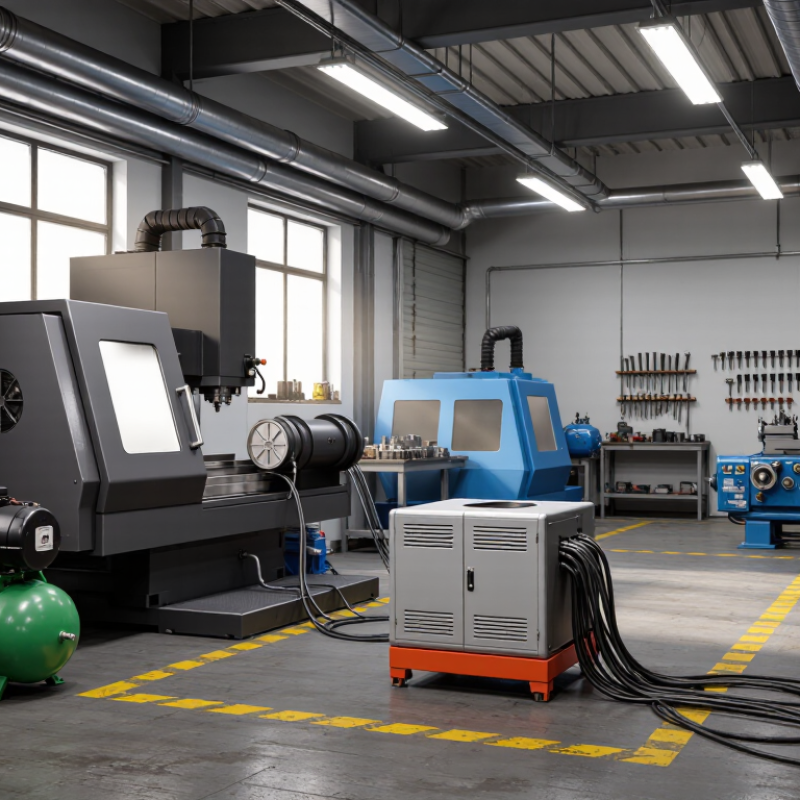
How to Choose the Right Power Phase Converter?

Define Your Electrical Load and Power Requirements

Before choosing a power phase converter, list every machine it will serve. Record each motor’s horsepower or kilowatts, voltage, phase, full-load amperage, and starting method from its nameplate. Include duty cycle and which machines may run together. The U.S. Department of Energy’s 2014 sourcebook, Improving Motor and Drive System Performance, reports that motor-driven systems use about 54% of U.S. industrial electricity. That figure is a useful reminder: motors deserve careful load assessment, not guesswork.

Pay close attention to startup current. A compressor, for example, may draw much more current while starting than while running. Note whether the largest motor starts alone or alongside other equipment, such as a coolant pump or dust collector. Converter sizing depends on that combination, not just the sum of running horsepower. Real loads are messy. A nameplate also cannot reveal every operating condition.

Check the available single-phase supply, its voltage, and its capacity, then compare these with the converter’s input and output ratings. For multiple machines, consider the largest motor and the total load expected to operate at once. Measure, don’t guess. An electrician can verify current and voltage under load, especially when equipment behaves differently than its labels suggest. Leave room for planned expansion, but avoid oversizing without a clear reason; it may add cost without solving a real need.

Compare Single-Phase, Three-Phase, and Rotary Converter Options

Choosing between single-phase, three-phase, and rotary converters starts with the load—not the machine’s advertised capacity. A single-phase supply may suit light-duty equipment, but a static converter can require motor derating and may struggle with repeated starts. Check the motor nameplate, starting current, and duty cycle. A tidy horsepower match can still disappoint.

Three-phase service is usually the cleanest option when available. Where it is not, a rotary converter can run multiple three-phase motors and handle tougher starting demands, provided it is sized for the largest starting load. It also adds a spinning component, space, and maintenance. A static unit may be simpler for one motor, but its output can vary with load. The details matter.

The U.S. Department of Energy’s 2014 report, Improving Motor and Drive System Performance, notes that motor-driven systems account for about 54% of U.S. manufacturing electricity use. That figure is not a converter comparison, but it shows why correct sizing and efficient motor operation deserve attention. Ask an electrician to verify voltage balance under your actual load. Measure it. Then check again after startup; real workshops rarely behave like the brochure.

How to Choose the Right Power Phase Converter?

Compare the number of AC phases supplied and delivered in common configurations.

How to read this: A rotary phase converter typically takes single-phase power and supplies three-phase power for compatible equipment. Choose a direct three-phase supply when it is available; single-phase power is suited to single-phase loads. Check equipment requirements and converter sizing before selecting a solution.

Check Voltage, Frequency, Capacity, and Phase Compatibility

Before choosing a power phase converter, compare its voltage with both the supply and the equipment nameplate. A machine marked for 400-volt, three-phase power may not run correctly on a converter configured for 230 volts. Check the actual supply with a meter, especially if voltage fluctuates when other equipment starts. Small details matter. When specifications are unclear, ask a qualified electrician to confirm them.

Frequency matters just as much. Many machines are designed for 50 or 60 hertz, and the wrong frequency can affect motor speed or heating. Capacity also needs more than a quick horsepower comparison. Motors often draw extra current at startup, so add up the loads that may operate together and allow suitable headroom. A common oversight is sizing only for steady running. It seems reasonable, but startup demand can still trip protection or slow the machine.

Confirm the phase arrangement at both ends: what enters the converter and what the equipment requires. Check output voltage, phase sequence, and whether a neutral is needed for controls or accessories. Sensitive electronics may have different requirements from a basic motor. I would not treat one label as the whole answer; real operating conditions can expose a mismatch that a specification sheet misses.

Evaluate Installation, Efficiency, Safety, and Maintenance Needs

How to Choose the Right Power Phase Converter?

Installation should begin with the load, not the converter label. Record motor horsepower, starting current, duty cycle, voltage, and phase imbalance. A workshop may have enough capacity for running power but still trip during startup. Check conductor sizing, grounding, ventilation, disconnect access, and enclosure protection with a qualified electrician. The installation must match applicable electrical codes and the equipment manual. Small oversights become expensive.

Efficiency deserves measurement. The International Energy Agency reports that electric motor systems consume about 46% of global electricity. Converter losses therefore matter, especially in equipment operating for many hours. Measure input and output voltage, current, power factor, and temperature under real load. A balanced three-phase output generally reduces motor heating and wasted energy. However, “higher efficiency” claims can mislead when tested without startup loads.

I would not trust a brochure alone.

Safety and maintenance are connected. Use overcurrent protection, emergency isolation, correct fault protection, and clear operating labels. NFPA 70B emphasizes documented, condition-based electrical maintenance. Inspect terminals for looseness, clean dust from cooling paths, and check abnormal noise or vibration. Thermal imaging can reveal hot connections before failure. Keep records of phase voltage and bearing temperature. Perfect balance is unlikely in practice. That is worth admitting. Review trends, not one optimistic reading.

Select the Converter Size and Features for Your Equipment

Choosing the right power phase converter starts with the equipment, not the converter label. Check the machine’s voltage, frequency, rated horsepower, and full-load current. A motor marked 10 horsepower may draw more during startup. That brief surge matters.

I recommend sizing from the largest starting load, then adding a practical safety margin. Review the converter’s continuous rating and starting capacity separately. Some equipment starts gently. Others use heavy pumps, compressors, or loaded belts. Ask a qualified electrician to measure actual current when possible. Nameplate data can be incomplete.

Match the output voltage carefully. Confirm whether the machine needs three-wire or four-wire power, and verify grounding requirements. For sensitive controls, choose a model with strong phase balance and stable voltage regulation. Protection against overload, short circuits, overheating, and voltage loss is also important. The enclosure should suit the installation area, especially where dust, moisture, or heat is present.

If several machines operate together, calculate their combined demand and starting sequence. Simultaneous starts can exceed expectations. Leave room for future equipment, but avoid excessive oversizing because efficiency and cost may suffer. I have seen installations fail because the converter was technically powerful enough, yet poorly matched to the control system. That mistake is easy to repeat. Check the manual twice.

How to Choose the Right Power Phase Converter? - Select the Converter Size and Features for Your Equipment

Equipment Requirement Recommended Converter Type Typical Equipment Size Important Sizing Consideration Recommended Features
One three-phase motor with a steady, balanced load Rotary phase converter Approximately 1–30 HP Choose a converter rated at or above the motor horsepower. Allow additional capacity for motor starting current. Automatic starting, overload protection, suitable enclosure, and phase-voltage monitoring
Several machines operating at the same time Rotary phase converter with multi-load capacity Approximately 5–50 HP total connected load Calculate the total running load and identify the largest motor that may start while other loads are operating. High starting capacity, control-panel compatibility, branch-circuit protection, and adequate ventilation
Variable-speed motor or equipment requiring adjustable speed Variable-frequency drive or drive-based converter Commonly up to approximately 20 HP per drive Match the drive input and output ratings to the motor voltage, full-load current, frequency, and operating mode. Speed control, soft starting, current limiting, programmable acceleration, and fault diagnostics
CNC, servo, welding, or sensitive electronic equipment Engineered electronic phase-conversion system Determined by connected kVA and equipment requirements Use the equipment manual to confirm allowable voltage imbalance, frequency tolerance, waveform quality, and neutral requirements. Voltage regulation, phase monitoring, surge protection, low harmonic distortion, and alarm contacts
Small single motor with occasional operation Static phase converter Typically below approximately 5 HP Static converters generally do not provide full three-phase power continuously and may reduce available motor output. Simple installation, low initial cost, motor protection, and compatibility with intermittent duty
High-inertia load, compressor, pump, or machine with frequent starts Heavy-duty rotary or electronic converter Select according to motor full-load current and starting demand Starting current can be several times the motor’s running current; use the manufacturer’s starting or locked-rotor data. Increased starting torque, bypass capability, thermal protection, and restart delay

Converter Selection Checklist

Data to Confirm Why It Matters Recommended Action
Available utility supply The converter must match the incoming single-phase voltage, frequency, and service capacity. Verify voltage, frequency, service amperage, breaker rating, and conductor size before selection.
Motor nameplate data Horsepower alone does not fully define the required converter capacity. Record motor voltage, full-load amperage, horsepower, frequency, phase, and service factor.
Starting method and load profile Frequent starts and high-inertia loads require more starting capacity than steady loads. Select a unit using starting current, locked-rotor current, or manufacturer sizing guidance.
Voltage balance and power quality Voltage imbalance can increase motor heating and reduce performance. Use a power-quality meter during commissioning and follow the equipment manufacturer’s limits.
Environment and installation location Heat, dust, moisture, and restricted airflow can reduce converter life and capacity. Choose the appropriate enclosure rating, ambient-temperature range, cooling method, and clearance.

Note: Horsepower ranges are general selection guidelines, not universal ratings. Final sizing should be based on the equipment nameplate, full-load current, starting requirements, duty cycle, local electrical code, and the converter manufacturer’s technical data.

FAQS

When is single-phase power suitable for a machine?

It may suit light-duty equipment. Check the motor’s starting current and duty cycle; a static converter may require motor derating.

What is the main advantage of three-phase service?

It is usually the simplest supply for three-phase equipment. Voltage and current still need checking under real operating conditions.

When might a rotary converter be a better fit?

It can run multiple three-phase motors and handle tougher starts. It needs space and maintenance because it has a spinning component.

How should I size a converter?

Start with the largest starting load, not just the motor’s horsepower. Check continuous rating and starting capacity separately.

Which machine details should I check?

Read the nameplate for voltage, frequency, horsepower, and full-load current. A 10-horsepower motor may draw much more during startup.

What if several machines run together?

Add their demand and consider the starting sequence. Simultaneous starts can exceed expectations. Measure the actual load when possible.

How can I check voltage balance?

Ask a qualified electrician to measure voltage under load and again after startup. Measure it. Then recheck.

Is a larger converter always safer?

Not necessarily. Excessive oversizing can affect cost and efficiency, while a poor control-system match can still cause trouble.

What protection and installation details matter?

Check for overload, short-circuit, overheating, and voltage-loss protection. Match the enclosure to dust, moisture, and heat. Check the manual twice.

Conclusion

Choosing the right Power Phase Converter begins with understanding your equipment’s electrical load, starting current, running power, voltage, and frequency requirements. Determine whether your application needs a single-phase supply, three-phase output, or a rotary converter capable of supporting demanding machinery. Compare each option according to phase compatibility, available capacity, expected operating conditions, and the type of equipment you plan to run.

Before making a selection, consider installation requirements, energy efficiency, safety features, maintenance needs, and available space. The converter should be sized to handle both normal operation and temporary startup surges without unnecessary capacity that increases cost and energy use. Useful features may include overload protection, clear monitoring controls, ventilation, and straightforward servicing access. By matching the converter’s specifications to your equipment and planning for reliable operation, you can achieve stable performance, reduce electrical strain, and support a safer, more efficient workspace.


Charlotte

Charlotte

Charlotte is a seasoned marketing professional with a deep understanding of the company's portfolio and a passion for elevating its presence in the market. With a keen eye for detail and a commitment to excellence, she ensures that our professional blog is regularly updated with insightful articles......