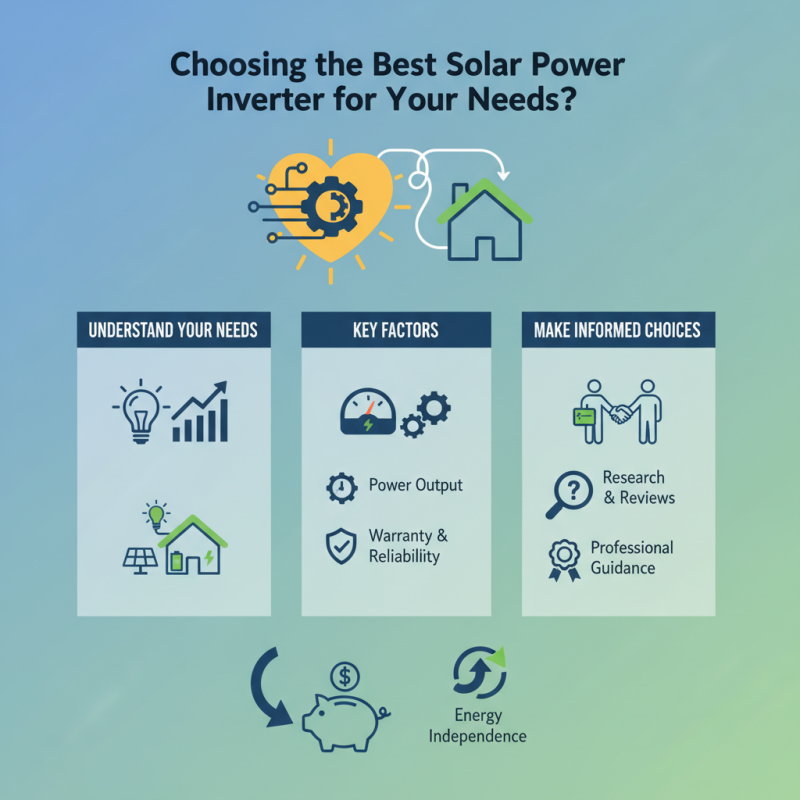
Choosing the best Solar Power Inverter for your needs can be a daunting task. With numerous brands and specifications available, how do you know which one suits you? Industry expert Dr. Emily Carter notes, "The right Solar Power Inverter can significantly enhance your system's efficiency." This underscores the importance of selecting the correct inverter.
A Solar Power Inverter is more than just a component; it is the heart of your solar energy system. It converts direct current (DC) from solar panels into alternating current (AC) for your home. Understanding your energy demands and system design is crucial. Not every inverter fits every system. Factors like power output and compatibility with other devices make a significant difference.
Navigating the choices can be overwhelming. Some inverters may lack features, leading to subpar performance. It's essential to assess warranties and reliability. User reviews can provide insights, yet they may be biased. Consider reaching out to professionals for guidance while remaining critical of their advice. The right choice can lead to long-term savings and enhanced energy independence. Your journey to finding the perfect Solar Power Inverter deserves careful consideration and analysis.
When considering solar power inverters, it's essential to understand their types and functions. Solar inverters are critical in converting DC electricity from solar panels into AC electricity for home use. There are three main types of inverters: string inverters, microinverters, and power optimizers. Each offers different advantages depending on your energy needs and system configuration.
String inverters are the most common. They link multiple panels together, making installation straightforward. However, they lack individual panel management. If one panel fails, it impacts the entire array.
Microinverters, on the other hand, optimize output at the panel level. They can maximize energy production, especially in shaded conditions. Power optimizers combine the benefits of both, but they still require a string inverter.
Tips: When choosing an inverter, consider your roof layout and potential shading. Conduct a thorough site evaluation. Not all homes benefit from the same type of inverter. Research is critical to avoid costly errors. It’s also worthwhile to explore product warranties and customer support options from manufacturers. Always question if an inverter matches your energy goals and budget.
When selecting a solar power inverter, several key factors should guide your choice. The inverter type is essential. You can choose between string inverters and microinverters. String inverters are generally more cost-effective, but microinverters offer better performance in shaded areas. Reflect on your solar panel layout. If your panels face different directions, microinverters might be more beneficial.
Efficiency ratings matter as well. A higher efficiency percentage means more energy conversion and savings over time. Look for inverters with an efficiency rating above 95%. This could impact your long-term energy bill significantly. Battery compatibility is another point to consider. If you plan to store energy for later use, ensure your inverter is compatible with your chosen battery system.
Don’t overlook the warranty and customer service. A solid warranty indicates manufacturer confidence in their product. Research customer feedback on support experiences. Installation can be tricky. If you're not handy, hiring a professional is wise. The inverter's placement matters too; it should be in a shaded area to ensure longevity.
Be aware that even with all considerations, unexpected issues may arise. Inspect your system regularly to catch any potential problems early.
When choosing a solar power inverter, efficiency ratings play a crucial role. An inverter’s efficiency impacts how much energy is converted from sunlight. High efficiency means more power generation and savings on your electricity bill. Not all inverters are created equal. Some models may claim high efficiencies, but the real-world performance can vary.
It’s essential to consider the peak efficiency rating as well as the weighted efficiency. Peak efficiency indicates how well the inverter performs under optimal conditions. However, it might not always reflect its performance in everyday use. Weighted efficiency provides a broader view since it accounts for various operating conditions throughout the day.
Investigate the inverter’s performance over time. Many users report a drop in efficiency after several years. This gradual decline can impact overall energy savings. It's also worth checking the warranty and customer reviews. These provide insight into reliability and long-term performance. Balancing these factors will guide you toward a more informed decision.
When considering solar inverters, installation is a key factor. Understanding the specific requirements helps ensure efficiency. Inverter placement should be near the main electrical panel. This reduces wire length, minimizing energy loss. Adequate space around the inverter is essential for ventilation. Overheating can cause poor performance or damage.
Weather conditions can also affect installation. Inverters must be sheltered from harsh elements. Installers should check for shading from trees or buildings. This can impact energy production. Mounting options include wall, ground, or even rooftop. Each choice has its pros and cons.
Another aspect involves local regulations. Many areas have codes regarding solar installations. It’s crucial to comply with these rules. This can sometimes lead to unexpected challenges. Consulting a local expert can clarify these points. Their insight can help navigate complex requirements. Your installation should be efficient and safe, offering reliable energy for years to come.
| Inverter Type | Power Rating (kW) | Efficiency (%) | Installation Location | Cost Estimate ($) |
|---|---|---|---|---|
| String Inverter | 3.0 | 95 | Outdoor | 1200 |
| Micro Inverter | 1.5 | 96 | Rooftop | 200 |
| Power Optimizer | 3.6 | 97 | Outdoor | 1500 |
| Hybrid Inverter | 5.0 | 94 | Indoor/Outdoor | 3000 |
Maintaining your solar power inverter is crucial for optimal performance. Regular upkeep can enhance efficiency and longevity. A well-maintained inverter typically has a lifespan of 5 to 10 years. Neglecting it may lead to reduced energy production. In fact, studies show that proper maintenance can increase energy yield by up to 20%.
One essential tip is to keep the inverter clean. Dust and debris can affect its operation. Check the unit every few months and wipe it down. Look for signs of wear or damage, especially on the cables and connections. If anything seems out of place, consult a professional. Small issues can quickly escalate if ignored.
Another tip involves monitoring the inverter’s performance. Keep an eye on energy output regularly. Identify any inconsistencies. Many modern inverters come with monitoring apps, making it easier to track performance. If you notice a drop in efficiency, investigate the cause. Sometimes, it could be a simple fix, like repositioning a solar panel. Remember, your inverter is a key component in your solar system. Keeping it in top shape will help you maximize the benefits of solar energy.
: The main types are string inverters, microinverters, and power optimizers. Each has distinct advantages.
String inverters link multiple solar panels. They are straightforward to install but don't manage individual panel performance.
Microinverters optimize energy output at the panel level. They perform better in shaded conditions compared to string inverters.
Power optimizers combine benefits of both string inverters and microinverters, but they still need a string inverter for use.
Efficiency affects how much sunlight is converted into electricity. Higher efficiency means more energy and cost savings.
Look at both peak efficiency and weighted efficiency for a complete picture of performance. They reveal different operating conditions.
Many users notice a drop in efficiency after several years, which impacts energy savings. Keep this in mind for long-term use.
Consider your roof layout and shading. Research thoroughly, and explore warranties and customer support to avoid mistakes.
No, some inverters may claim high efficiency, but their actual performance can vary based on conditions and time.
Conduct a thorough site evaluation. It helps ensure the inverter meets your energy goals and fits your budget.
When selecting a Solar Power Inverter, it's essential to understand its types and functions to ensure it meets your energy needs. Key factors to consider include efficiency ratings, which can vary significantly among different models, as well as installation requirements that could affect your setup. Evaluating these elements helps to ensure you choose an inverter that aligns with your solar power system and environmental conditions.
Moreover, maintaining your Solar Power Inverter is crucial for optimal performance throughout its lifespan. Regular inspections and upkeep can prevent failures and enhance efficiency, ultimately contributing to a more reliable solar energy generation. By considering these aspects, you can make an informed decision that maximizes the benefits of your solar power investment.

Bangzhao Electric