Choosing among China’s best Solar Charge Controller manufacturers requires more than comparing factory prices. It requires evidence, testing, and practical experience. A controller sits between the solar panel, battery, and load. Its decisions affect charging speed, battery life, system safety, and long-term operating cost. One small terminal can become a serious failure point.
Solar educator and industry specialist Chris Rauschen describes the controller as “the heart of the system.” That idea remains useful when evaluating Chinese suppliers. Strong manufacturers publish charging profiles, efficiency data, protection functions, and operating temperature ranges. They also explain whether their MPPT or PWM design suits lithium, AGM, gel, or flooded batteries. Ask for samples. Inspect the casing, terminals, display, firmware, and heat management. Then test performance under changing sunlight, not only inside a showroom.
Experience exposes details that brochures often hide. A controller may perform well at 25°C but reduce output inside a hot metal cabinet. Communication ports may exist, yet lack stable software support. Certifications can help, but they do not replace independent verification. That is where this topic becomes less comfortable. There is no single “best” Chinese manufacturer for every project. A rural lighting system, a marine battery bank, and a commercial storage site need different priorities. The better question is simple: which supplier can prove consistent quality, responsive engineering, and dependable after-sales support? Real records matter. Promises do not.
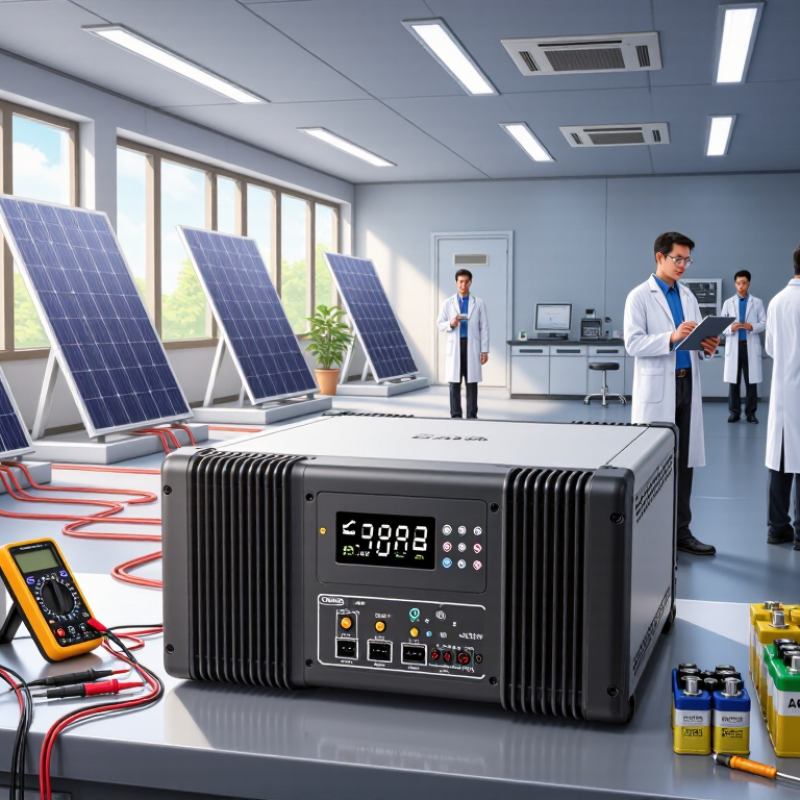
Chinese solar charge controller manufacturers offer several practical designs for different photovoltaic systems. The main choice is between PWM and MPPT technology.
PWM units are simple. They connect panels to batteries with limited conversion complexity. This suits small lighting systems, garden equipment, and basic off-grid cabins.
MPPT controllers track the panel’s maximum power point. They can capture more energy during cold mornings, weak sunlight, or long cable runs. Their advanced electronics need careful thermal design and accurate voltage sensing.
Many Chinese manufacturers also produce dual-battery controllers for vehicles, boats, and backup systems. Solar street-light controllers often include dusk-to-dawn operation, load dimming, and battery protection. Hybrid models can coordinate solar input with grid or generator charging.
Waterproof versions are useful in humid workshops and outdoor enclosures. Check the stated IP rating, operating temperature, and cable-terminal quality. Small details matter.
A reliable supplier should provide wiring diagrams, test records, and clear limits for voltage and current. Independent testing against relevant regional requirements adds confidence. In practical system reviews, I check whether the screen shows battery voltage, charging current, and fault codes clearly.
A higher charging rating is not automatically better. Oversizing can increase heat and shorten component life. I have also found that some manuals leave installation gaps, so buyers should question unclear grounding, fuse, and ventilation instructions before ordering.
When evaluating China’s best solar charge controller manufacturers, buyers should examine engineering details rather than rely on advertising claims. A reliable controller uses accurate voltage sensing, stable charging algorithms, and efficient power conversion. MPPT technology can improve energy harvest when sunlight changes quickly. PWM models may suit smaller, cost-sensitive systems.
Protection features matter in real installations. Look for safeguards against overcharging, deep discharge, reverse polarity, short circuits, overheating, and lightning-related surges. A strong enclosure should resist dust and moisture, especially in rooftop or agricultural settings. Temperature compensation is also important. Battery charging changes between a cold mountain site and a hot coastal warehouse.
Practical testing reveals more than a polished specification sheet. Ask for efficiency curves, thermal test records, warranty terms, and evidence of quality-control procedures. Clear manuals and responsive technical support reduce wiring mistakes during installation. Remote monitoring can help, but an attractive mobile interface does not prove electrical reliability. I have seen systems with excellent dashboards and poor sensor calibration. That detail is easy to miss. Independent certification, traceable components, and consistent factory inspection offer stronger evidence of dependable performance. No controller is perfect; proper sizing, ventilation, and battery matching still determine the final result.
This benchmark compares common PWM and MPPT controller characteristics. MPPT controllers generally provide higher conversion efficiency and can harvest more usable energy under changing sunlight conditions, while PWM controllers are typically simpler and more economical. The figures are representative engineering benchmarks and do not represent any specific company or brand.
China-based solar charge controller manufacturers serve residential, commercial, and off-grid projects worldwide. Their product ranges often include PWM and MPPT controllers for different system sizes. MPPT models can improve energy harvest during changing sunlight conditions. However, product selection should begin with actual load data, not attractive catalog images. Check battery voltage, rated current, operating temperature, and enclosure protection before requesting quotations.
Experienced buyers should inspect the manufacturer’s engineering process. Ask for wiring diagrams, efficiency curves, firmware update procedures, and sample test reports. Factory audits can reveal production discipline, calibration methods, and component traceability. Certifications aligned with relevant international standards also deserve careful review. They do not replace independent testing. A detailed warranty should define repair response, spare parts, and communication duties.
My first supplier shortlist was too broad. That was a mistake. I now compare technical documents before discussing price. A small sample order can expose weak terminals, unclear instructions, or unstable charging behavior. Ask whether the controller supports lithium batteries, remote monitoring, low-temperature protection, and adjustable charging parameters. Some manufacturers respond quickly but avoid difficult questions. That warning matters. Reliable Chinese manufacturers usually explain limitations clearly, accept reasonable customization, and provide consistent data across samples, manuals, and production units. Nevertheless, every claim should be verified under the project’s real climate and installation conditions.
How to Evaluate Chinese Solar Charge Controller Suppliers
China’s large manufacturing base deserves careful, not automatic, trust. The IEA PVPS Trends 2024 report recorded 456 GW of new global photovoltaic capacity in 2023. That expansion increases demand for reliable charge controllers, but supplier selection still requires evidence. Request test reports, factory photographs, production records, and traceable serial numbers. Check whether the controller follows IEC 62509 and relevant IEC 62109 safety requirements. Ask for measured MPPT efficiency, standby consumption, operating temperature, and protection performance. Marketing claims are not test results.
Sample units should operate under realistic conditions. Use a 12 V or 24 V battery, variable irradiance, and a controlled thermal test. Compare charging voltage, conversion losses, display accuracy, and recovery after overload. A supplier should explain component sourcing and calibration intervals clearly. IRENA’s Renewable Capacity Statistics 2024 reported global renewable capacity reached 3,870 GW in 2023, with solar representing the largest share of new additions. Scale matters, but consistency matters more. Review at least three production batches, not one attractive sample. No checklist is perfect. Even experienced buyers can overlook firmware changes between batches. Ask for change-control records, warranty terms, spare-part availability, and response times for technical faults. A low price may hide weaker capacitors, limited testing, or poor after-sales support.
| Evaluation Dimension | Recommended Data or Benchmark | What to Verify With the Supplier | Suggested Weight | Evaluation Score |
|---|---|---|---|---|
| Controller Technology | MPPT is generally preferred for variable weather, cold temperatures, and systems requiring higher energy harvest. PWM is more suitable for small, cost-sensitive systems where panel and battery voltage are closely matched. | Confirm the controller type, operating principle, conversion method, and whether the stated ratings apply to continuous operation rather than short-term peak output. | 10% | __/10 |
| Rated Charge Current | Common product classes include approximately 10 A, 20 A, 30 A, 40 A, 60 A, 80 A, and 100 A. The selected rating should exceed the calculated maximum charging current with an engineering margin. | Request the rated current test conditions, thermal derating curve, and maximum continuous current at the intended ambient temperature. | 8% | __/10 |
| System Voltage Compatibility | Common battery-system settings are 12 V, 24 V, 36 V, and 48 V. Some controllers detect voltage automatically, while others require manual configuration. | Check supported nominal voltage, automatic detection limits, lithium-battery compatibility, and whether charging parameters can be configured independently for each voltage. | 8% | __/10 |
| PV Input Voltage | MPPT products often support a broad PV input range, commonly from approximately 60 V to 150 V, depending on the model. The maximum open-circuit voltage must not be exceeded in the coldest expected conditions. | Verify maximum PV open-circuit voltage, operating-voltage range, start-up voltage, and the supplier's method for calculating cold-temperature voltage rise. | 10% | __/10 |
| Conversion Efficiency | Well-designed MPPT controllers commonly advertise peak efficiencies around 95% to 99%. Practical efficiency varies with input voltage, battery voltage, load, and temperature. | Request an efficiency curve or independent test report instead of relying only on a single peak-efficiency figure. | 9% | __/10 |
| Charging Algorithm | Typical charging stages include bulk, absorption, and float. Lithium-battery applications may require configurable voltage limits and disabling of unnecessary float or equalization functions. | Confirm adjustable charging voltage, charging time, temperature compensation, equalization control, low-temperature charging protection, and lithium battery profiles. | 10% | __/10 |
| Protection Functions | Important protections include reverse polarity, overcurrent, short circuit, overvoltage, overtemperature, reverse current, and battery over-discharge. | Ask for protection thresholds, recovery conditions, fault codes, alarm behavior, and evidence from safety or reliability testing. | 10% | __/10 |
| Thermal Management | Power losses increase with current. Aluminum heat sinks, temperature monitoring, ventilation design, and automatic current derating help maintain reliability. | Review thermal test data, maximum operating temperature, derating behavior, fan specifications if used, and whether the enclosure is suitable for the installation environment. | 8% | __/10 |
| Enclosure and Ingress Protection | Outdoor installations commonly require a sealed enclosure rated at least IP65; the appropriate level depends on exposure to rain, dust, condensation, and direct sunlight. | Verify the exact IP rating, test standard, gasket material, UV resistance, cable-entry design, and whether the rating applies after installation. | 7% | __/10 |
| Electrical Safety and EMC | Relevant compliance may include applicable requirements for low-voltage safety, electromagnetic compatibility, environmental restrictions, and market-specific product approval. | Request valid test reports, certificates, declaration documents, report numbers, issuing laboratories, product model coverage, and certificate expiry status. | 10% | __/10 |
| Communication and Monitoring | Useful options include an LCD display, RS485, Bluetooth, wireless monitoring, data logging, relay outputs, and integration with an external energy-management system. | Confirm communication protocol, supported interfaces, application language, data-access rights, cybersecurity practices, firmware-update method, and offline operation. | 5% | __/10 |
| Customization Capability | Common customization areas include charging voltage, connector type, cable length, screen language, enclosure labeling, firmware parameters, and communication interfaces. | Check engineering capability, minimum order quantity, tooling charges, sample approval process, firmware version control, and change-notification procedures. | 5% | __/10 |
| Quality Control System | A reliable production process should include incoming-material inspection, PCB and component traceability, assembly inspection, functional testing, aging or burn-in testing, and final inspection. | Request quality-process documents, inspection records, calibration certificates, failure-rate data, corrective-action procedures, and a sample quality-control plan. | 10% | __/10 |
| Product Testing | Testing should cover rated-load operation, high and low temperatures, humidity, vibration where relevant, abnormal input conditions, protection functions, and long-duration operation. | Ask whether tests are performed internally or by an independent laboratory, and request test conditions, acceptance criteria, test dates, and model numbers. | 8% | __/10 |
| Warranty and After-Sales Service | A written warranty of approximately 1 to 5 years is common in the market, but coverage, exclusions, replacement rules, and response time are more important than duration alone. | Confirm warranty period, return procedure, spare-parts availability, technical support hours, remote troubleshooting process, repair location, and average response time. | 8% | __/10 |
| Supply Capacity | Production capability should be assessed against the required quantity, delivery schedule, product consistency, and peak-season capacity rather than factory size alone. | Verify monthly capacity, normal lead time, component inventory policy, production scheduling, backup suppliers, and shipment performance for comparable orders. | 5% | __/10 |
| Commercial Transparency | A dependable quotation should clearly separate product price, packaging, tooling, testing, shipping terms, taxes, payment terms, and any recurring software or service fees. | Compare itemized quotations and confirm model number, revision, included accessories, tolerances, delivery terms, payment protection, and procedures for specification changes. | 7% | __/10 |
| Sample and Pilot Validation | Before mass production, test samples under the actual PV voltage, battery chemistry, ambient temperature, cable length, load profile, and installation conditions. | Document sample results, measured charging efficiency, thermal performance, alarm behavior, communication stability, and differences between approved samples and production units. | 10% | __/10 |
China Best Solar Charge Controller Manufacturers?
A reliable solar charge controller supplier should prove more than factory capacity. Ask for documented quality controls, incoming component inspections, and traceable production records. In China, serious manufacturers commonly align products with IEC standards and maintain quality systems such as ISO 9001. Certifications must match the exact model, voltage range, and market. One certificate does not cover every controller.
Export support is equally practical. Experienced suppliers provide English manuals, wiring diagrams, test reports, packaging specifications, and clear communication after shipment. They should explain customs documents, spare parts, warranty handling, and technical training without vague promises. Small details matter: readable terminal labels, reinforced carton corners, and firmware records can prevent installation errors. Factory photos are not proof. Independent inspection remains valuable for large orders.
Tips: Request recent certificate copies and verify their scope. Compare sample performance under heat, low battery voltage, and changing sunlight. Check support for your destination’s electrical and safety requirements. Keep written acceptance criteria before production. Do not judge quality from price alone. A low quote may hide weaker components or limited testing. My assessment may be incomplete, so buyers should test samples and review local compliance requirements before signing.
PWM controllers are simple and suit small lighting systems or basic cabins. MPPT controllers collect more energy during cold mornings or weak sunlight. MPPT units usually require better thermal design and voltage sensing.
Choose PWM for small systems with short cable runs. Garden lights and simple off-grid equipment may need little complexity. Keep expectations realistic.
MPPT technology tracks the panel’s maximum power point. It can reduce energy losses during changing sunlight conditions. Long cables and cool weather may increase its value.
Dual-battery controllers can manage separate battery banks. They may suit vehicles, boats, and backup installations. Confirm battery voltage and charging limits before purchase.
Check the IP rating, operating temperature, and terminal quality. Waterproof housings help in humid workshops or outdoor boxes. Good sealing cannot fix poor wiring.
Request wiring diagrams, efficiency curves, test records, and charging limits. Manuals should explain grounding, fuses, ventilation, and battery settings. Unclear instructions deserve direct questions.
No. Certificates must match the exact model and voltage range. Independent testing still provides useful evidence. Factory photos are not enough.
Compare technical documents before comparing prices. Request recent certificates, sample units, and traceable production records. Inspect terminals, screen readings, and fault-code visibility.
No. Oversizing may create extra heat and shorten component life. Match the controller with actual load data. Bigger is not automatically safer.
Test charging stability, labels, terminals, and instructions. Try heat, low battery voltage, and changing sunlight. My assessment may miss hidden faults, so local testing remains important.
Choosing the right Solar Charge Controller from Chinese manufacturers requires understanding the main product types, including PWM and MPPT controllers, and matching them to the system’s voltage, battery chemistry, and power requirements. A reliable controller should offer accurate charging regulation, battery protection, temperature compensation, efficient energy conversion, clear monitoring functions, and stable operation under changing environmental conditions. These features help improve system safety, battery life, and overall performance.
When evaluating Chinese suppliers, buyers should review manufacturing experience, product testing procedures, technical support, customization capabilities, production capacity, and delivery reliability. It is also important to confirm relevant quality standards, safety certifications, documentation, warranty policies, and export support for the target market. Comparing samples, communication quality, after-sales service, and total ownership costs can help identify a dependable supplier. A careful evaluation process ensures that the selected Solar Charge Controller meets technical expectations while supporting long-term and compliant solar energy projects.

Bangzhao Electric