Choosing the right Pv Combiner Box can shape a solar project’s safety, reliability, and maintenance workload. In 2026, developers face more varied system designs, including rooftop arrays, utility-scale fields, battery-coupled systems, and high-voltage DC applications. Each project demands a different balance between circuit capacity, enclosure protection, monitoring, and installation speed.
A well-designed combiner box gathers multiple PV strings into a controlled DC output. It can include fuses, surge protection devices, disconnects, current sensors, and remote communication modules. These components help technicians isolate faults and understand array performance before a small issue becomes a costly outage. In coastal locations, corrosion-resistant materials matter. On dusty sites, sealing quality and thermal management deserve close inspection. In high-altitude areas, temperature changes may affect enclosure performance and component ratings.
Details matter.
This guide examines the main Pv Combiner Box types expected to support solar projects in 2026. It compares traditional fused models, intelligent monitoring boxes, outdoor-rated enclosures, and solutions designed for larger utility arrays. The discussion follows practical engineering considerations, including string voltage, current limits, cable routing, maintenance access, and compatibility with inverters. Field experience shows that the cheapest box is rarely the least expensive choice over twenty years. Still, product claims require careful verification. Monitoring features may look impressive, yet they can add configuration work and maintenance points. No single design fits every project. Site conditions, electrical architecture, and local technical requirements must guide the final decision.
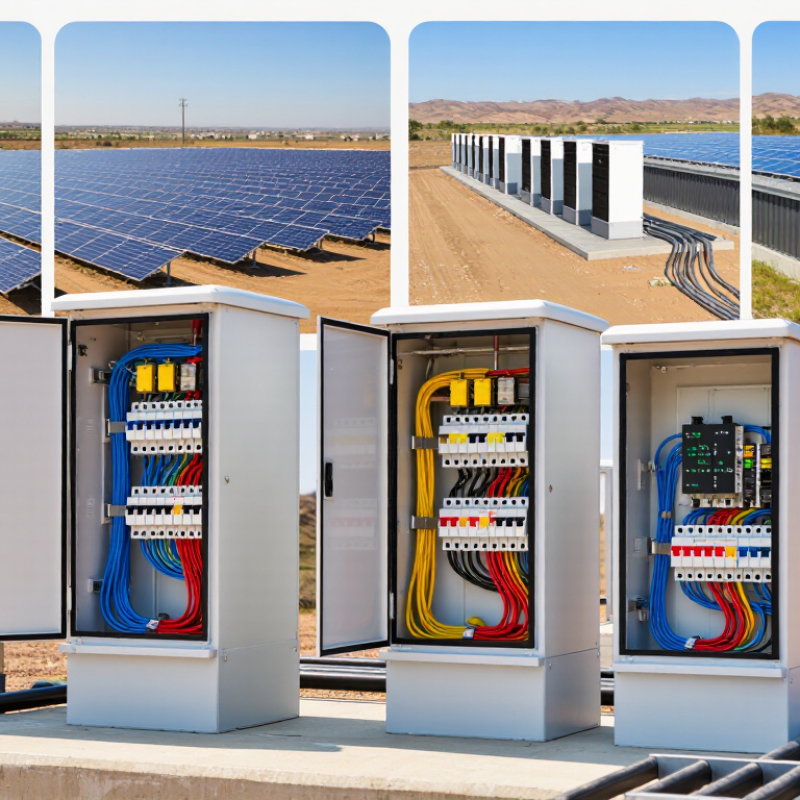
A PV combiner box gathers current from multiple photovoltaic strings before power reaches the inverter. It is a practical junction point. Inside, fuses or circuit breakers protect individual strings from fault currents. Surge protection devices help limit damage from transient overvoltage. A DC disconnect can support safer maintenance when correctly rated and installed.
The IEA PVPS Trends in Photovoltaic Applications 2024 report recorded more than 400 GW of new solar capacity in 2023. Global cumulative capacity exceeded 1.4 TW. This scale increases the value of disciplined DC design. A combiner box reduces cable runs, organizes string wiring, and creates clearer testing points. However, it cannot correct poor crimping, mismatched connectors, or undersized conductors. Field experience shows that small installation errors can create heat at terminals.
Location matters. The enclosure should suit outdoor exposure, ultraviolet radiation, dust, and temperature changes. Engineers typically check voltage ratings against the array’s maximum cold-weather voltage. They also verify current margins, grounding methods, ingress protection, and coordination with inverter protection. NREL’s photovoltaic operation and maintenance guidance stresses regular inspections, thermal checks, and documented corrective work. These tasks reveal loose terminals early. Sometimes, the box looks perfect. The readings disagree.
Designers should also consider monitoring needs, future expansion, and service access. A basic box may suit a small rooftop array. Utility-scale projects often require string-level measurement and remote alarms. That adds cost and wiring. It also adds useful visibility. The less comfortable truth is that “more features” do not always mean better reliability. Configuration must match the project, not the catalog.
PV combiner boxes differ because project scale changes current, voltage, access, and maintenance needs. For small residential arrays, a compact rooftop box usually combines two to six strings. It may include string fuses, surge protection, and a DC isolator. Space is limited there. An installer should verify enclosure temperature, cable bending radius, and roof exposure before selection. A small enclosure can become crowded quickly.
Commercial rooftop and carport systems often need modular combiner boxes. These units accept more strings and may support current monitoring for each input. Remote status helps technicians find an open fuse or abnormal string without walking across every roof section. Outdoor installations need weather-resistant enclosures, secure cable glands, and clear labeling. Redundancy matters. However, adding every option can increase heat and maintenance points.
Utility-scale projects commonly use high-capacity DC combiner boxes near array blocks. They may combine many strings, include coordinated surge protection, and connect to central inverters or DC collection systems. Some designs add fiber or wireless monitoring, while others favor simpler hardware for easier servicing. In dusty fields, filter choice and sealing deserve attention. I have seen designs that looked efficient on paper but complicated testing. Thermal calculations, fault-current checks, and local code review should guide the final type. The right box depends on the project, not simply its size.
In 2026, PV combiner boxes should be compared by site conditions, not appearance alone. Field inspections often reveal cracked cable glands, loose terminals, and moisture marks inside poorly selected enclosures. Check the box’s maximum DC voltage, input current, and string capacity against the array design. A small margin matters.
Protection options deserve closer attention. String fuses can limit reverse-current damage, while a DC disconnect supports safer maintenance. Surge protective devices help manage lightning-related transients, especially on exposed rooftops and long cable runs. Confirm their voltage rating, discharge capacity, and replacement indication. Grounding terminals should accept the project’s conductor size without forcing tight bends. That detail is easy to miss.
Look for UV-resistant materials, sealed cable entries, corrosion resistance, and a suitable IP or NEMA enclosure rating. High temperatures can reduce fuse performance and shorten component life, so ventilation and derating data should be reviewed. Monitoring functions may report string current, voltage, temperature, or door status. Useful data. But sensors add wiring, software, and failure points. A recurring lesson is that more features do not always mean better protection. A basic box can be reliable when correctly sized and installed. A sophisticated box can still fail after poor torque control or neglected inspections. The comparison should include testing records, installation instructions, spare-part access, and service support, not only the purchase price.
The chart compares common PV combiner box configurations by their typical maximum number of string inputs. Basic fused units are suited to smaller arrays, while monitored and utility-scale units support larger string counts and more advanced system protection.
Typical protection options include string fuses, DC surge protective devices, load-break disconnects, insulation or current monitoring, and remote communications. Actual ratings depend on the project design, module characteristics, system voltage, fault-current requirements, and applicable electrical codes.
Selecting the right PV combiner box starts with the array design, not the enclosure. The IEA’s Renewables 2024 report recorded about 420 GW of new solar PV capacity in 2023. Projects are growing quickly, but their electrical conditions differ sharply. Confirm string quantity, maximum DC voltage, operating current, and expected fault current before comparing models. A box rated for today’s array may fail after a planned expansion.
Use IEC 62548 for PV array design and IEC 61439 for low-voltage assemblies as technical reference points. Check fuse coordination, DC isolation, surge protection, and monitoring functions. Type 1 or Type 2 surge protection depends on the project’s lightning risk and upstream protection. An IP rating alone is not enough. Inspect UV resistance, salt exposure, condensation control, cable glands, and thermal derating at the actual installation temperature.
The IRENA Renewable Capacity Statistics 2024 report placed global solar capacity near 1,419 GW at the end of 2023. That scale increases pressure on maintenance teams. Choose clear labeling, accessible fuse holders, and replaceable surge devices. Small details matter. A crowded box slows fault diagnosis. My practical caution is simple: engineers often specify current capacity, then overlook heat. Recalculate losses inside the enclosure at midday, with every string operating. The cheapest selection can become the most expensive service problem. Also question unnecessary monitoring features; more data does not guarantee better decisions.
In 2026, PV combiner boxes may include fused string boxes, DC isolator boxes, and monitoring-enabled enclosures. Selection should match array voltage, current, string count, and environmental exposure. Installation begins with a clear circuit layout. Mount the box upright on a stable, non-combustible surface. Keep cable entries downward where possible. This reduces water movement toward terminals.
Use correctly rated conductors, glands, fuses, and surge protection devices. Every connection needs proper torque, not just a tight feeling. Poorly tightened terminals can create heat, discoloration, and unexpected shutdowns. Maintain separation between positive and negative conductors. Label each string clearly. Field conditions rarely match drawings perfectly, so the final labels should reflect the installed system.
Tips: Photograph the wiring before closing the enclosure. Check polarity with an approved meter. Inspect seals after drilling. Leave working space around the box. During maintenance, isolate the circuit, verify zero voltage, and follow the project’s electrical safety procedure. Never rely only on an open switch, because stored or back-fed energy may remain. Inspect for corrosion, cracked glands, insects, loose hardware, and water marks after severe weather. Thermal scanning can reveal hot terminals before failure, but it is not a replacement for torque checks. A review may expose an overlooked detail, such as a cable bending too sharply near the entry. Fix it early.
| PV Combiner Box Type | Typical Project Use | Typical DC Rating | Common Input Capacity | Core Protection and Monitoring | Installation Considerations | Maintenance Requirements | Key Safety Considerations |
|---|---|---|---|---|---|---|---|
| Basic String Combiner Box | Small residential, commercial, and distributed rooftop arrays where multiple PV strings are connected before the inverter. | Usually 600–1,000 V DC; 1,500 V DC versions are available for utility-scale designs. | Typically 2–12 string inputs, depending on fuse holders, terminals, and enclosure size. | String fuses or circuit breakers, insulated busbars, and optional Type 2 DC surge protective device. | Mount in an accessible shaded location when possible. Use UV-resistant PV cable, correct polarity, proper cable glands, and adequate bend radius. | Inspect enclosure seals, terminals, fuses, corrosion, cable glands, and surge protection status at least annually or according to the site maintenance plan. | Verify the DC isolator is suitable for PV use. Treat conductors as energized whenever modules are exposed to light. |
| Fused PV Combiner Box | Projects requiring overcurrent protection for parallel strings, particularly where reverse-current risk exceeds the module or cable rating. | Commonly 1,000 V or 1,500 V DC; current ratings must match the selected fuse holders and busbars. | Often 4–24 strings, with one appropriately rated fuse per string or per protected circuit. | gPV fuses, touch-safe fuse holders, DC surge protection, and optional string-current indication. | Select fuse voltage, current, interrupt rating, and temperature derating from the system design. Follow manufacturer torque values. | Check fuse condition and signs of overheating. Replace only with the same type, voltage, current, and interrupt rating. | Never remove a fuse under load unless the equipment is specifically designed for that operation. Apply lockout/tagout and verify absence of voltage. |
| DC Isolator Combiner Box | Rooftop and ground-mounted systems that need a local means of disconnecting combined PV circuits for service or emergency response. | Typically 600–1,500 V DC, with current rating selected for the maximum continuous operating current. | Commonly 2–12 inputs, combined into one or more protected outputs. | DC load-break isolator, string fuses where required, surge protection, and clearly labeled ON/OFF positions. | Install the isolator where it remains accessible and visible. Confirm the device is rated for the number of poles and the intended DC switching duty. | Operate and inspect according to the equipment instructions. Check enclosure integrity, handle condition, terminal torque, and signs of arcing. | Do not use an AC-only disconnect for a PV DC circuit. Clearly label the source, load, voltage, and emergency shutdown procedure. |
| Surge-Protected PV Combiner Box | Sites exposed to lightning activity, long outdoor cable runs, or elevated transient-voltage risk. | Commonly 600–1,500 V DC, subject to the PV array and inverter voltage design. | Usually 2–24 strings, with surge protection installed on the DC side and sometimes on communication circuits. | Type 1 or Type 2 DC SPD selected according to the lightning protection concept, system earthing arrangement, and applicable standard. | Keep SPD conductors short and straight. Bond the enclosure and protective earth using the specified conductor size and routing method. | Inspect the SPD status indicator after storms and during scheduled service. Replace the cartridge or complete device when its end-of-life indicator is shown. | An SPD does not replace correct grounding, bonding, shielding, or an engineered lightning protection system. |
| String-Monitoring Combiner Box | Commercial and utility-scale installations where identifying underperforming, disconnected, or faulted strings is important. | Commonly 1,000–1,500 V DC; monitoring electronics may require a separate low-voltage supply or auxiliary power module. | Often 8–32 strings, with individual current measurement or string-level status detection. | String fuses, DC SPD, current sensors, temperature sensing, alarm contacts, and RS-485 or other site communication interfaces. | Plan communication cable routing separately from high-current DC conductors. Address network topology, shielding, grounding, and enclosure heat dissipation. | Review alarms and current trends, test communications, inspect sensors, and compare string readings under similar irradiance conditions. | Do not rely on monitoring data as the sole proof of isolation. Use approved test instruments and site switching procedures. |
| High-Current Utility-Scale Combiner Box | Large ground-mounted solar plants using long DC feeders and centralized or distributed inverter stations. | Frequently 1,500 V DC, with output current determined by the number of parallel strings and conductor configuration. | Typically 16–48 or more strings, subject to thermal design, cable size, fuse arrangement, and project requirements. | High-capacity gPV fuses, DC disconnects, surge protection, monitoring, auxiliary terminals, and heavy-duty copper or aluminum busbars. | Provide a stable foundation, service clearance, drainage, UV protection, and cable support. Apply continuous-current and ambient-temperature derating. | Use a documented preventive-maintenance program covering thermal scanning, torque verification, insulation checks, fuse inspection, and data review. | Confirm short-circuit ratings, arc-flash procedures, earthing continuity, and safe access before energization or troubleshooting. |
| Outdoor Harsh-Environment Combiner Box | Coastal, desert, high-humidity, agricultural, or dusty sites where enclosure durability and environmental sealing are critical. | Typically 600–1,500 V DC, based on the system design and selected components. | Commonly 4–24 strings, with capacity limited by internal heat, cable entry space, and component ratings. | Corrosion-resistant enclosure, UV-resistant glands, sealed terminals, string fuses, SPD, and optional anti-condensation accessories. | Select an enclosure rating appropriate to the installation environment, such as IP65 or higher where justified. Avoid cable entries on upward-facing surfaces. | Clean dust and salt deposits, inspect gaskets and breather devices, check for condensation, and tighten or replace corroded hardware. | Do not drill or modify the enclosure without preserving its environmental rating. De-energize before opening in wet or contaminated conditions. |
Compare site conditions, not appearance alone. Check maximum DC voltage, input current, and string capacity. Allow a small margin. A polished enclosure can still be undersized.
String fuses can limit reverse-current damage. A DC disconnect supports safer maintenance. Surge protection helps manage lightning-related transients. Confirm voltage rating, discharge capacity, and replacement indication.
Choose UV-resistant materials, sealed cable entries, corrosion resistance, and a suitable IP or NEMA rating. Review temperature limits and derating data. Heat can shorten component life.
No. Monitoring may show current, voltage, temperature, or door status. It also adds wiring, software, and failure points. More data is useful. More complexity is not automatically safer.
Mount it upright on a stable, non-combustible surface. Keep cable entries downward where possible. Maintain working space around the enclosure. Use correctly rated conductors, glands, fuses, and surge devices.
Apply the specified torque to every terminal. Do not trust a “tight feeling.” Poor torque can cause heat, discoloration, and unexpected shutdowns. Keep positive and negative conductors separated.
Photograph the wiring. Check polarity with an approved meter. Inspect seals after drilling. Label each string according to the installed system. Confirm grounding terminals fit the conductor size without sharp bends.
Isolate the circuit and verify zero voltage. Follow the project’s electrical safety procedure. Do not rely only on an open switch. Stored or back-fed energy may remain.
Check for corrosion, cracked cable glands, insects, loose hardware, and water marks. Thermal scanning can reveal hot terminals. It cannot replace torque checks. A sharply bent cable may be the overlooked problem.
Review testing records, installation instructions, spare-part access, and service support. A basic box can work reliably when correctly sized. A sophisticated box can still fail after poor installation. That comparison deserves another look.
This guide explains how a Pv Combiner Box brings multiple photovoltaic string outputs together, simplifies system wiring, and supports safer, more efficient power collection in solar installations. It reviews the main types used in residential, commercial, utility-scale, rooftop, and ground-mounted projects, helping readers understand how system size, DC voltage, string count, outdoor conditions, and expansion plans influence equipment selection.
The article also compares important features such as fuses, circuit breakers, surge protection, disconnect switches, monitoring functions, enclosure ratings, grounding, and thermal management. For 2026 projects, selecting the right box requires careful attention to electrical compatibility, safety standards, environmental exposure, maintenance access, and total project cost. Proper installation should include correct cable routing, secure connections, labeling, testing, and appropriate isolation procedures. Regular inspections, cleaning, torque checks, and protection-device testing can help maintain reliable performance and reduce operational risks throughout the solar system’s service life.

Bangzhao Electric